
<a name=”top”></a>
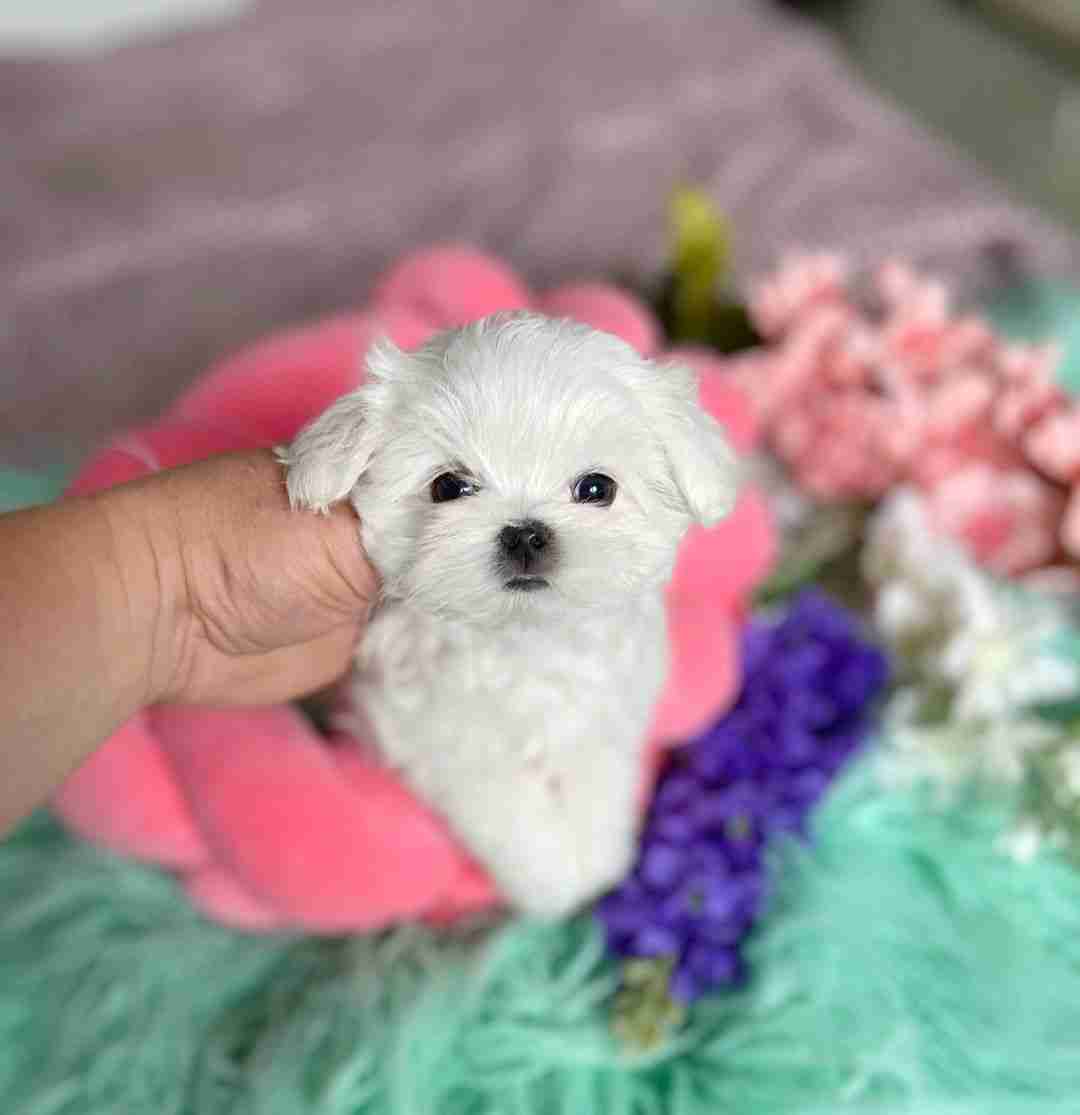
Premium Maltese Puppies for Sale | 10-Year Health Guarantee | MFS

- Adult Weight: Under 5 lbs (Guaranteed)
- Papers: Full AKC Registration Included
- Availability: NJ, Brooklyn & Nationwide
- MFS Adoption Fee: $1,700 Fixed













🐾 Apply for a Puppy Today
Fill in the details below — we respond within 24 hours. Fields marked * are required.
<a name=”hero”></a>
AKC Maltese Puppies for Sale with 10-Year Health Guarantee | DNA Tested | Omaha, NE
Are you ready to welcome a fluffy cloud of pure love into your home? At (MFS), we’ve been connecting families with extraordinary Maltese puppies since 2010. Located in Oak Plaza, Omaha, NE 68106, Lawrence and Cathy Magee have built their reputation on one simple promise: healthy puppies, happy families, zero compromises.
Ready to meet your new best friend? Call (531) 368-0538 or email [email protected] today. Our Maltese puppies are selling fast, with current wait times of 8-12 weeks for upcoming litters. Don’t wait—your perfect puppy is just one phone call away!
What makes a Maltese or a Velcro pup from MFS different? It’s simple: we combine old-world breeding expertise with cutting-edge health testing. Every Maltese puppy comes with Embark DNA testing, OFA certifications, and a remarkable 10-year health guarantee—the best in the industry. With a 0% genetic health claim rate since our founding, we’re not just breeders; we’re your partners in lifelong puppy happiness.
Whether you’re searching for a Micro Tiny Maltese, a classic Teacup Maltese, or a Standard Maltese, we have the perfect match for your lifestyle. Plus, with safe delivery to over 150 cities across 22 states, bringing your Maltese home has never been easier.
<a name=”key-takeaways”></a>
Key Takeaways: Why Choose Our Maltese Puppies
What Makes MFS Maltese Puppies Exceptional?
Before you dive into everything there is to love about Maltese puppies, here’s what you need to know about choosing MFS:
✅ 10-Year Industry-Leading Health Guarantee – We stand behind every puppy with the most comprehensive warranty in the business, covering genetic and congenital conditions through Embark DNA testing and OFA health screenings.
✅ 0% Genetic Health Claim Rate Since 2014 – That’s right: in over 500 puppies placed, we’ve never had a single genetic health claim. Our rigorous health testing with Embark Gold Level protocols ensures your Maltese puppy is built to thrive.
✅ Puppy Culture Certified – We follow Jane Killion’s Puppy Culture protocol, including Early Neurological Stimulation (ENS) developed by Dr. Carmen Battaglia, giving your puppy a neurological advantage from day one.
✅ Free Delivery to 150+ Cities – From Denver (DEN) to Miami (MIA), from Los Angeles (LAX) to New York (JFK), we deliver your Maltese puppy safely to your door across Colorado, Florida, California, Texas, New York, Pennsylvania, Ohio, New Mexico, South Dakota, North Dakota, Montana, South Carolina, North Carolina, Georgia, Louisiana, Illinois, and Arizona.
✅ Transparent Pricing: $2,500-$3,800 – No hidden fees, no surprise costs. Our pricing reflects the exceptional care, health testing, and lifetime support you receive. Micro Tiny Maltese start at $3,200, while Standard Maltese begin at $2,500.
✅ Small-Scale, Ethical Breeding – We produce just 8-12 litters per year, allowing us to provide individualized attention to every puppy. No puppy mills, no mass production—just carefully planned breeding with champion bloodlines.
✅ Lifetime Breeder Support – Questions at 2 AM? Need grooming advice six months in? We’re here. Lawrence and Cathy personally answer every call at (531) 368-0538.
✅ 4.9/5.0 Rating from 200+ Reviews – Don’t just take our word for it. Families across America trust MFS for their Maltese puppies. Check out our Google reviews, Better Business Bureau A+ rating, and testimonials from happy families.
✅ HomeAgain Microchipping – Every puppy comes with HomeAgain microchip registration, ensuring your Maltese can always find their way home.
✅ AKC Registered Parents – All our breeding Maltese are registered with the American Kennel Club, meeting the highest breed standards.
Ready to experience the MFS difference? Your perfect Maltese puppy is waiting. Call (531) 368-0538 now or visit our available puppies page to see who’s ready for their forever home today!
<a name=”available-puppies”></a>
Available Maltese Puppies & Varieties
Meet Our Currently Available Maltese Puppies
At MFS, we specialize in three distinct Maltese size varieties, each carefully bred to meet specific family needs. Whether you’re looking for a white Maltese puppy, pocket-sized premium teacup puppies, or a slightly sturdier playmate, we have the perfect Maltese puppy waiting for you.
Size Categories Explained
Micro Tiny Maltese Puppies (3-4 lbs adult weight)
Our smallest Maltese variety, Micro Tiny Maltese are perfect for apartment living, seniors, or anyone seeking the ultimate lap dog. At just 3-4 pounds fully grown, these delicate darlings require gentle handling but reward you with enormous personality. Priced from $3,200-$3,800 due to the rarity and specialized care required during breeding.
Teacup Maltese Puppies (4-5 lbs adult weight)
The sweet spot for many families, Teacup Maltese offer the best of both worlds: petite size with slightly more durability than Micro Tiny varieties. These puppies adapt beautifully to both city and suburban life, traveling easily and requiring minimal space. Priced from $2,800-$3,400.
Standard Maltese Puppies (5-7 lbs adult weight)
Meeting the American Kennel Club breed standard, our Standard Maltese are the most robust variety, perfect for families with children or active lifestyles. These puppies offer the iconic Maltese elegance with enhanced heartiness. Priced from $2,500-$3,000.
<a name=”health-guarantee”></a>
Industry-Leading 10-Year Health Guarantee & DNA Testing
Why Our Health Guarantee Changes Everything
When you invest in a Maltese puppy from MFS, you’re not just buying a pet—you’re entering a decade-long partnership built on trust, transparency, and comprehensive health assurance. Our 10-year health guarantee isn’t just paperwork; it’s a reflection of our absolute confidence in our breeding program.
Here’s the remarkable truth: Since opening our doors in 2014, we’ve placed over 500 Maltese and Maltipoo puppies, and we’ve had a 0% genetic health claim rate. Zero. That’s not luck—that’s the result of meticulous health testing, careful breed selection, and an unwavering commitment to ethical breeding practices.
What Does Our 10-Year Health Guarantee Cover?
Our guarantee protects you against all congenital and genetic conditions that may affect your Maltese puppy, including but not limited to:
- Progressive Retinal Atrophy (PRA) – A genetic eye disease that can lead to blindness
- Luxating Patella – Kneecap dislocation common in small breeds
- Hip Dysplasia – Though rare in Maltese, we test through OFA
- Liver Shunt (Portosystemic Shunt) – Abnormal blood vessel connections
- Heart Defects – Including Patent Ductus Arteriosus (PDA)
- Hydrocephalus – Fluid accumulation in the brain
- White Shaker Syndrome – Neurological condition specific to white dogs
- Hypoglycemia (in puppies under 6 months) – Low blood sugar, which we actively prevent through proper feeding protocols
The MFS Health Testing Protocol
Every breeding Maltese in our program undergoes comprehensive health screening before ever producing a litter. Here’s what we do:
Embark DNA Testing – The gold standard in canine genetic testing, Embark screens for 250+ genetic health conditions, including those most relevant to Maltese:
- Von Willebrand Disease
- Factor VII Deficiency
- GM1 Gangliosidosis
- Progressive Retinal Atrophy (multiple forms)
- And 240+ additional conditions
We’re proud to be an Embark Gold Level breeder, meaning we DNA test every single breeding dog and make results available to puppy families. When you choose an MFS Maltese, you can review your puppy’s parent’s complete genetic health clearances.
OFA Health Certifications – The Orthopedic Foundation for Animals evaluates our breeding Maltese for:
- Patella evaluation – Ensuring knee stability
- Cardiac screening – Detecting heart abnormalities
- Eye examination – Through Canine Eye Registration Foundation (CERF)
Our breeding Maltese receive OFA numbers only after passing these rigorous evaluations, ensuring structural soundness passes to your puppy.
HomeAgain Microchipping – Every Maltese puppy leaves our program with a registered HomeAgain microchip, providing lifetime identification and recovery services. If your Maltese ever gets lost, HomeAgain’s 24/7 call center ensures they can find their way home.
Comprehensive Veterinary Examination – Before your puppy goes home, our veterinarian Dr. Sarah Walsh DVM conducts a full health examination, including:
- Physical structure assessment
- Heart and lung auscultation
- Neurological reflexes
- Ocular examination
- Weight and body condition evaluation
Nobivac Vaccination Protocol – We follow American Animal Hospital Association (AAHA) guidelines for puppy vaccinations, using Nobivac vaccines:
- First DHPP (Distemper, Hepatitis, Parainfluenza, Parvovirus) at 6-7 weeks
- Second DHPP at 9-10 weeks (before going home)
- Vaccination records and schedule provided for booster continuation
Intestinal Parasite Screening – Every litter receives fecal testing and preventive deworming using Panacur to ensure your puppy arrives parasite-free.
How to Invoke Your Health Guarantee
Should the unexpected occur—and remember, in 500+ puppies, it hasn’t—here’s how our guarantee protects you:
- Veterinary Diagnosis Required – Have your licensed veterinarian diagnose any suspected genetic condition within the guarantee period.
- Second Opinion Option – We’ll cover the cost of a second opinion from a veterinary specialist if needed.
- Three Remedy Options:
- Replacement Puppy – Receive a puppy of equal value from our next available litter
- Full Refund – Return your puppy for a complete refund of purchase price
- Financial Assistance – Keep your puppy and receive reimbursement for treatment costs (up to purchase price)
- No Questions Asked – We stand behind our guarantee without the fine print loopholes you see with other breeders.
Preventive Health: What We Do Before You Even Meet Your Puppy
Health guarantees are wonderful, but preventing health issues is even better. Here’s how we set your Maltese puppy up for a lifetime of wellness:
Early Neurological Stimulation (ENS) – Developed by Dr. Carmen Battaglia, ENS involves five daily exercises performed from days 3-16 of life:
- Tactile stimulation (between toes)
- Head held erect
- Head pointed down
- Supine position
- Thermal stimulation
Research shows ENS produces dogs with:
- Improved cardiovascular performance (stronger heartbeats)
- Stronger adrenal glands (better stress tolerance)
- Greater resistance to disease
- Enhanced problem-solving abilities
Puppy Culture Protocol – We’re certified in Jane Killion’s Puppy Culture program, which includes:
- Neonatal Period (0-2 weeks) – ENS exercises, proper nutrition monitoring
- Transitional Period (2-3 weeks) – Introduction to sounds, surfaces, gentle handling
- Awareness Period (3-4 weeks) – Socialization begins, litter box training starts
- Enrichment Period (5-7 weeks) – Novel experiences, problem-solving exercises, human bonding
- Fear Impact Period (8-11 weeks) – Careful socialization, positive experiences
Nutrition Foundation – From conception through weaning, we use premium nutrition:
- Breeding females receive Purina Pro Plan Sport during pregnancy and lactation
- Puppies wean onto Royal Canin Starter Mother & Babydog
- Transition support provided to your preferred food brand
Environmental Enrichment – Maltese puppies are raised in our home (never kennels), exposed to:
- Household sounds (TV, vacuum, dishwasher, doorbell)
- Various flooring textures
- Crate training introduction
- Multiple handling by family members
- Controlled exposure to visitors
Why Other Breeders Can’t Match Our Guarantee
Most Maltese breeders offer 1-2 year health guarantees. Why can MFS confidently offer 10 years?
- Genetic Testing Eliminates Risk – Embark DNA testing removes genetic uncertainty. When we know our breeding dogs are genetically clear, we can confidently guarantee offspring.
- Small-Scale Program – With only 8-12 litters annually, we know every parent dog intimately, monitoring health changes year-round.
- Long-Term Tracking – We stay in touch with puppy families, tracking health outcomes across hundreds of puppies. This data proves our breeding decisions produce healthy dogs.
- No Puppy Mill Practices – Puppy mills can’t offer long guarantees because mass production and profit prioritization inherently compromise health. We breed for quality, not quantity.
Real Testimony: When Health Guarantees Matter
“When we brought home our Maltese puppy Snowflake from MFS in 2016, we knew we had a great breeder. But the real test came at age 3 when Snowflake developed some unusual symptoms. Lawrence and Cathy were immediately responsive, helping us find a specialist and walking us through every step. Turns out it was just a minor issue, but knowing they stood behind Snowflake gave us incredible peace of mind. That’s the MFS difference—they’re not just breeders, they’re lifelong partners in your puppy’s health.”
— Jennifer Martinez, Denver, Colorado (Snowflake’s mom, 2016)
Certifications & Affiliations
Our commitment to health extends beyond testing to industry recognition:
- Better Business Bureau (BBB) A+ Rating – Consumer protection seal of approval
- USDA Licensed & Inspected – Meeting federal animal welfare standards
- Puppy Culture Certified – Advanced socialization and enrichment training
- Embark Gold Level Breeder – Comprehensive genetic health testing commitment
- American Maltese Association Resources – Following breed club health recommendations
Questions about our health guarantee? Lawrence and Cathy personally answer every inquiry. Call (531) 368-0538 or email [email protected] today. Your peace of mind is our priority.
<a name=”what-is-maltese”></a>
What is a Maltese?
The Ancient Aristocrat in Your Lap
The Maltese is a toy dog breed that packs enormous personality into a petite 4-7 pound package. Recognized by the American Kennel Club since 1888, the Maltese is characterized by its floor-length, silky white coat, dark expressive eyes, and black button nose. But calling a Maltese just a “small white dog” is like calling a Rolls-Royce just “a car”—you’re missing the elegance, history, and exceptional temperament that define this ancient breed.
Standing just 7-9 inches tall at the shoulder, Maltese are classified in the AKC Toy Group, alongside other diminutive companions like Yorkshire Terriers, Pomeranians, and Pugs. Yet the Maltese stands apart: while most toy breeds were developed for specific tasks (Yorkies for ratting, Pugs for companionship), the Maltese has served just one purpose for over 2,800 years—to be humanity’s most devoted, affectionate companion.
Maltese don’t shed thanks to their lack of an undercoat, making them one of the most popular hypoallergenic dog breeds. While no dog is 100% hypoallergenic, the Maltese produces significantly less dander than double-coated breeds, with approximately 95% of mild allergy sufferers tolerating them well. This single-layer coat requires daily maintenance but rewards you with that signature silky elegance.
Lifespan: 12-15 years, with many Maltese reaching 16-18 years with proper care
Weight: 4-7 pounds (breed standard)
Height: 7-9 inches at shoulder
Coat: Single-layer, pure white, silky texture
Temperament: Affectionate, playful, gentle, devoted
Energy Level: Moderate—daily walks and play sessions suffice
The Maltese isn’t just a lap dog; they’re an interactive, intelligent companion who thrives on human connection. They’re often called “velcro dog breed” because they prefer to be physically touching their human at all times. If you’re looking for an independent dog, the Maltese isn’t for you. But if you want a devoted shadow who greets you with overwhelming enthusiasm every time you return home—even if you only stepped outside for 30 seconds—the Maltese is your breed.
Learn more: Explore our sections on Temperament & Personality, Grooming Requirements, and Care & Exercise to discover if a Maltese is your perfect match.
<a name=”breed-history”></a>
Breed History: 2,800 Years of Companionship
From Ancient Malta to Modern America
The Maltese can legitimately claim to be one of the oldest documented dog breeds in human history. Ancient Greek pottery from approximately 500 BCE depicts small, white, long-coated dogs remarkably similar to today’s Maltese. The Greek philosopher Aristotle referenced “canes melitenses” (dogs of Malta) in his writings, praising their beauty and companionship qualities.
While the exact origin remains debated among canine historians, most evidence points to the Mediterranean island of Malta as the breed’s ancestral home. Malta served as a crucial trade hub throughout ancient times, and these small white dogs became prized exports, spreading throughout the Greek and Roman empires. Roman empresses, including those in the court of Emperor Claudius, kept Maltese as treasured companions.
The Royal Lap Dog
Throughout the Middle Ages and Renaissance, Maltese continued their role as aristocratic companions. They appeared in paintings by old masters including Titian, Goya, and Sir Joshua Reynolds, always portrayed alongside nobility. Queen Elizabeth I, Mary Queen of Scots, and Queen Victoria all owned Maltese, cementing the breed’s association with royalty.
The breed nearly faced extinction twice: once during Europe’s Dark Ages, when only Chinese breeders preserved the line, and again in the 17th-18th centuries when misguided attempts to miniaturize the breed to “teacup” size without modern veterinary knowledge led to severe health issues. Thanks to dedicated British breeders in the 1800s, the Maltese was stabilized at its current size and health standard.
Maltese in America
Maltese arrived in the United States in the late 1800s, with the American Kennel Club officially recognizing the breed in 1888. Early American Maltese were primarily white, though the breed standard initially allowed lemon or tan markings. By the mid-1900s, pure white became the only acceptable color under AKC breed standards.
Today, the Maltese consistently ranks among the top 40 most popular breeds in America, beloved for their adaptability to modern lifestyles, hypoallergenic qualities, and unwavering devotion.
The Name Debate
Despite the breed’s strong association with Malta, some historians argue the name derives from “Melita,” an ancient Sicilian town, or even from the Semitic word “màlat” (meaning “refuge” or “port”). Regardless of etymology, the Maltese has lived up to its reputation as a “refuge” of comfort for humans across 28 centuries.
Fun fact: The American Maltese Association, established in 1954, is the official AKC breed parent club, dedicated to preserving Maltese type, temperament, and health through responsible breeding education.
Interested in preserving this ancient breed? Learn about Our Breeding Commitment and how we honor 2,800 years of Maltese excellence with every litter.
<a name=”temperament”></a>
Temperament & Personality: The Velcro Dog
What’s It Really Like to Live with a Maltese?
If you could design the perfect indoor companion dog, you’d probably end up with something remarkably similar to a Maltese. These dogs aren’t just pets—they’re full-time emotional support specialists, entertainment directors, and devoted shadows who believe their sole purpose in life is to be near you, on you, or preferably, in your lap.
The Maltese Personality: Core Traits
Affectionate Beyond Measure – The Maltese isn’t content to be in the same room as you; they need physical contact. They’ll follow you from room to room, curl up against your leg while you work, and somehow manage to position themselves in your lap even when you thought there was no space. This isn’t neediness—it’s devotion distilled into 6 pounds of fluff.
Playful Yet Gentle – Despite their aristocratic appearance, Maltese have a wonderfully playful side. They’ll engage in energetic play sessions, zoom around the house in bursts of “Maltese madness,” and enthusiastically chase toys. But unlike terriers with prey drive, Maltese play remains gentle and family-friendly.
Fearless (and Sometimes Foolish) – Maltese possess what’s often called “big dog syndrome.” They seem entirely unaware of their diminutive size, readily challenging dogs ten times their weight and fearlessly exploring new environments. This confidence is endearing, but it requires owner vigilance to prevent them from biting off more than they can chew—literally.
Intelligent and Trainable – Maltese are smart dogs who learn quickly…when properly motivated. They excel at learning tricks, can master complex commands, and often succeed in AKC performance events. The catch? They’re also smart enough to be selectively stubborn when they don’t see the point of compliance.
Alert Watchdogs – Your Maltese will notify you of every delivery truck, passing pedestrian, and neighborhood squirrel. They take their watchdog duties seriously, making them excellent alert systems for apartment dwellers. However, excessive barking can become a challenge without proper training.
Sensitive Souls – Maltese are emotionally intuitive, reading human moods with remarkable accuracy. They respond poorly to harsh training methods, raised voices, or household tension. Positive reinforcement training and gentle consistency yield the best results.
Maltese with Children
Maltese can be excellent with children—with important caveats. Their small size makes them vulnerable to injury from rough handling, accidental dropping, or being stepped on. Families with children under age 8 should consider a Standard Maltese (6-7 lbs) rather than Micro Tiny varieties (3-4 lbs).
With proper supervision and teaching children gentle handling, Maltese become devoted playmates. They’re particularly well-suited to school-age children who can respect their size and interact appropriately.
Maltese with Other Pets
Maltese generally coexist peacefully with other dogs and even cats, especially when socialized early. Their lack of prey drive means they’re unlikely to chase feline housemates. However, their fearless nature means they may challenge larger dogs without recognizing the danger. Always supervise interactions with large breed dogs, regardless of how gentle the large dog appears.
Many Maltese actually prefer having another small dog companion, as it provides entertainment when humans are busy. Maltipoos make excellent companions for Maltese, sharing similar size and temperament.
Separation Anxiety: The Maltese Challenge
The Maltese’s intense devotion has a potential downside: separation anxiety. These dogs were literally bred for thousands of years to be constant companions, so being left alone contradicts their core programming. Without proper crate training and gradual desensitization, Maltese may develop problematic behaviors when left alone, including:
- Excessive barking or howling
- Destructive chewing
- House soiling (even when fully potty-trained)
- Depression and loss of appetite
Prevention is key: Start crate training early using Puppy Culture protocols, practice short absences from puppyhood, and consider doggy daycare or pet sitters for longer absences. Every MFS Maltese puppy begins crate training before going home, giving them a foundation for healthy independence.
Lifestyle Compatibility
Perfect for:
- Retirees and empty nesters with time for companionship
- Apartment dwellers (with proper exercise)
- People with mild allergies seeking hypoallergenic dogs
- Individuals seeking therapy or emotional support dogs
- Families with older, gentle children
- First-time dog owners committed to positive training
Challenging for:
- People with demanding schedules requiring long absences
- Very active individuals seeking hiking/running companions
- Families with toddlers or very young children
- Those unable to commit to daily grooming
- People seeking independent, aloof dogs
Learn about training your Maltese: Check out our Training & Intelligence section for practical tips on harnessing Maltese smarts.
FAQ Group #1: Maltese Temperament Questions
<a name=”faq-temperament”></a>
Q: Do Maltese bark a lot?
A: Maltese are naturally alert and will bark to announce visitors, unusual sounds, or perceived threats. Without training, excessive barking can develop. However, with consistent positive reinforcement training and proper socialization, most Maltese learn to bark appropriately. Teaching “quiet” commands early and rewarding calm behavior significantly reduces nuisance barking. Learn more about training techniques in our Training & Intelligence section.
Q: Are Maltese good for first-time dog owners?
A: Yes! Maltese are excellent starter dogs due to their small size, manageable exercise needs, and eager-to-please temperament. However, first-time owners must commit to daily grooming, consistent positive training, and understanding that Maltese need significant human companionship. They’re perfect for first-time owners who work from home or have flexible schedules.
Q: Can Maltese be left alone during the workday?
A: While adult Maltese can tolerate 4-6 hours alone with proper training, 8+ hour absences are challenging for this breed. Maltese form intense bonds and may develop separation anxiety with long, frequent absences. Solutions include doggy daycare, pet sitters, or adopting a second dog for companionship. Puppies under 6 months should never be alone for more than 2-3 hours.
Q: Do Maltese like to cuddle?
A: Absolutely! Maltese are among the most affectionate dog breeds, literally bred for lap companionship. They’ll happily spend hours curled up against you while you read, work, or watch TV. If you’re seeking a dog who provides constant physical affection, the Maltese exceeds all expectations.
Q: Are Maltese aggressive?
A: Well-bred, properly socialized Maltese are not aggressive. They may bark alerts and display typical “small dog syndrome” confidence, but true aggression is rare and usually results from fear, poor socialization, or pain. MFS Maltese puppies are extensively socialized using Puppy Culture protocols, producing confident, friendly adults. Any aggressive tendencies typically stem from owners reinforcing fearful or defensive behaviors by coddling or failing to provide proper training.
Q: How do Maltese handle cold weather?
A: Maltese have single-layer coats without the insulating undercoat of breeds like Huskies. They’re sensitive to cold and require sweaters or coats for winter walks. Extended outdoor time in temperatures below 40°F isn’t recommended. Maltese are happiest in moderate climates or as primarily indoor dogs with brief outdoor excursions in extreme weather.
Q: What is “Maltese madness” and is it normal?
A: “Maltese madness” refers to sudden bursts of energetic running, often in circles, that many Maltese display daily. Scientifically called Frenetic Random Activity Periods (FRAPs), these zoomies are completely normal and healthy. They typically occur in puppies and young adults, often after baths, meals, or periods of rest. Provide safe space for these energy releases and enjoy the entertainment!
<a name=”grooming”></a>
Grooming Requirements: Maintaining That Silky White Coat
Is a Maltese High Maintenance?
Let’s be honest: if you want a wash-and-wear dog, the Maltese isn’t your breed. That stunning, floor-length white coat requires commitment. However, the payoff—a gorgeous, hypoallergenic companion who looks like a living cloud—makes the effort worthwhile for most owners. The good news? With proper techniques and the right tools, daily Maltese grooming becomes a bonding ritual rather than a chore.
Daily Grooming Requirements
Coat Brushing (10-15 minutes daily)
The Maltese’s silky single coat tangles easily without daily attention. Use a high-quality pin brush and metal comb to work through the entire coat, paying special attention to friction areas: behind ears, under armpits, around the collar area, and between back legs. Work in sections, brushing from skin to tip to prevent breakage.
Recommended tools:
- Chris Christensen pin brush (available at Amazon)
- Greyhound comb (for finishing)
- Detangling spray (we recommend The Stuff)
Eye Care (Daily)
Maltese are prone to tear staining—those reddish-brown streaks beneath the eyes. This occurs due to:
- Shallow eye sockets causing tear overflow
- Yeast and bacteria buildup in tear residue
- Teething (temporary in puppies)
- Low-quality diet with artificial dyes
Prevention and treatment:
- Wipe eyes daily with warm water and cotton pad
- Use veterinarian-approved tear stain removers like Angels’ Eyes Natural
- Keep facial hair trimmed or tied up
- Feed high-quality, dye-free food (Royal Canin Maltese Adult is specifically formulated to reduce staining)
- Provide filtered or distilled water (minerals can worsen staining)
Face and Muzzle Cleaning
After each meal, wipe your Maltese’s face with a damp cloth to prevent food residue buildup, which contributes to discoloration. Many owners keep baby wipes handy for quick touch-ups throughout the day.
Weekly Grooming Tasks
Bathing (Once Weekly)
Maltese benefit from weekly baths using high-quality whitening shampoos designed for white coats. The American Kennel Club recommends:
- Thoroughly brush and de-tangle before bathing (water sets tangles)
- Use lukewarm water and whitening shampoo (Bio-Groom Super White is popular)
- Follow with conditioning treatment to maintain silkiness
- Rinse completely—residue causes skin irritation
- Towel dry and blow dry on low heat while brushing
Nail Trimming
Small dogs need frequent nail care as they don’t naturally wear down nails on pavement like larger dogs. Trim weekly or bi-weekly using quality nail clippers or a Dremel-style grinder. If you hear clicking on floors, nails are too long.
Ear Cleaning
Check ears weekly for redness, odor, or excessive wax. Clean with veterinary-approved ear cleaner and cotton balls. Maltese can be prone to ear infections due to hair growing in ear canals—pluck or have your groomer remove this hair regularly.
Professional Grooming Options
Most Maltese owners opt for professional grooming every 4-6 weeks. Two main style options exist:
Full Coat (Show Cut)
Coat maintained at floor-length, parted down the spine, with a topknot. This traditional look is gorgeous but requires significant daily maintenance:
- 15-20 minutes daily brushing
- Weekly baths
- Frequent conditioning treatments
- Topknot bands changed daily
- Wrapping coat at night (for serious show enthusiasts)
Puppy Cut (Pet Trim)
Coat trimmed to 1-2 inches all over for easier maintenance. This practical style:
- Reduces brushing to 5-10 minutes daily
- Allows for bi-weekly baths
- Eliminates floor-dragging coat concerns
- Still looks adorable and distinctly “Maltese”
Most pet owners choose puppy cuts, visiting groomers every 4-6 weeks for maintenance. Budget $50-$80 per grooming session depending on location.
Dental Care: A Maltese Essential
Small breeds like Maltese are particularly prone to dental disease due to tooth crowding. According to the American Veterinary Dental College, 80% of dogs show signs of dental disease by age 3—and small breeds develop problems even earlier.
Daily teeth brushing is essential:
- Use canine toothpaste (Never human toothpaste)
- Finger brush or soft dog toothbrush
- Enzymatic toothpaste works best
- Dental chews and toys supplement but don’t replace brushing
Many owners combine teeth brushing with face cleaning as part of the daily routine. Professional dental cleanings every 1-2 years prevent serious problems like tooth loss, infections, and the heart/kidney damage associated with untreated dental disease.
Grooming Supplies Checklist
Initial Investment (~$100-150):
- Quality pin brush and metal comb
- Nail clippers or grinder
- Canine toothbrush and toothpaste
- Whitening shampoo and conditioner
- Detangling spray
- Ear cleaning solution
- Tear stain remover
- Hair bows or bands (for topknots)
Ongoing Costs:
- Professional grooming: $50-80 every 4-6 weeks ($600-1,200 annually)
- Products: ~$30-50 monthly
Training Your Puppy to Accept Grooming
Start grooming routines from day one. Our Puppy Culture protocol includes grooming desensitization:
- Handle paws, ears, mouth daily from 3 weeks old
- Introduce brushing as a game with treats
- Practice short grooming sessions (2-3 minutes) multiple times daily
- Always end on a positive note
Well-socialized Maltese learn to enjoy grooming time as quality one-on-one attention. Every MFS puppy has been introduced to brushing, nail trimming, and face cleaning before going home, giving you a head start on grooming acceptance.
Need grooming guidance? We provide detailed grooming tutorials and product recommendations to all puppy families. Call (531) 368-0538 for post-adoption grooming support!
<a name=”nutrition”></a>
Nutrition & Feeding: Fueling Your Maltese
What Should You Feed a Maltese Puppy?
Proper nutrition forms the foundation of your Maltese’s health, coat quality, energy levels, and longevity. Small breed dogs like Maltese have unique nutritional needs: faster metabolisms, smaller stomachs, and higher risk of hypoglycemia. Feeding your Maltese correctly isn’t complicated, but it requires understanding these special considerations.
Puppy Feeding Protocol (8 Weeks to 12 Months)
Caloric Needs
Maltese puppies need approximately 40-60 calories per pound of body weight daily during growth phases. A 4-pound puppy requires 160-240 calories spread across multiple meals.
Feeding Schedule:
- 8-12 weeks: 4 meals daily (every 4-5 hours)
- 3-6 months: 3 meals daily
- 6-12 months: 2-3 meals daily
- 12+ months: 2 meals daily (adult schedule)
Frequent small meals prevent hypoglycemia (low blood sugar), a dangerous condition in toy breed puppies. Symptoms include:
- Lethargy or weakness
- Trembling or shivering
- Disorientation or stumbling
- Seizures (severe cases)
Emergency treatment: Rub corn syrup or honey on gums and contact your veterinarian immediately. Prevention through frequent feeding is crucial during the first 6 months.
Recommended Puppy Foods
We wean MFS Maltese puppies onto Royal Canin Starter Mother & Babydog, then transition to small breed puppy formulas around 10 weeks. Top recommendations:
Royal Canin Small Puppy – Specifically designed for toy and small breeds, with small kibble size and balanced nutrition for jaw development.
Hill’s Science Diet Small Paws Puppy – DHA from fish oil supports brain and eye development, antioxidants support immune system.
Purina Pro Plan Small Breed Puppy – High protein (28%) for muscle development, DHA for cognitive development, crunchy kibble for dental health.
Wellness CORE Grain-Free Small Breed Puppy – For owners preferring grain-free options (though note: grain-free isn’t necessary for most dogs and should be discussed with your vet).
Transition slowly: When changing your MFS puppy to your preferred food, mix 25% new food with 75% Royal Canin for 3 days, then 50/50 for 3 days, then 75/25 for 3 days before switching completely. Sudden changes cause digestive upset.
Adult Feeding (12 Months +)
Adult Maltese need 35-45 calories per pound daily. A 6-pound adult requires 210-270 calories daily, split between two meals.
Top Adult Food Recommendations:
Royal Canin Maltese Adult – Breed-specific formula addressing Maltese needs:
- Exclusive kibble shape for easy pickup with flat muzzle
- Biotin and omega fatty acids for coat health
- Nutrient profile reduces tear staining
- Supports skin health and hypoallergenic properties
Hill’s Science Diet Small Paws Adult – Balanced nutrition with omega-6 fatty acids for skin and coat, easy-to-digest ingredients.
Wellness Complete Health Small Breed – Deboned chicken, wholesome grains, probiotics for digestive health.
Purina Pro Plan Bright Mind Adult Small Breed – Contains botanical oils that nourish the brain, particularly beneficial for senior Maltese (7+).
Feeding Best Practices
Portion Control
Obesity is a serious health risk for Maltese, stressing tiny joints and increasing risk of luxating patella. You should easily feel (but not see) your Maltese’s ribs. If you can’t feel ribs without pressing, reduce portions by 10%.
Avoid Table Scraps
Human food contributes to obesity, can cause tear staining (from dyes and spices), and creates picky eating behaviors. Many human foods are toxic to dogs:
- Chocolate, grapes, raisins, onions, garlic
- Xylitol (artificial sweetener in many products)
- Macadamia nuts, avocado
- Complete toxic food list from ASPCA
Fresh Water Always Available
Provide filtered or distilled water in stainless steel or ceramic bowls (plastic can cause tear staining and harbor bacteria). Change water twice daily.
Food Bowl Placement
Elevated feeders aren’t necessary for Maltese. In fact, the American Veterinary Medical Association notes that elevated feeders may increase bloat risk in some breeds. Standard floor-level bowls work perfectly.
Special Dietary Considerations
Food Allergies
While true food allergies are relatively rare, some Maltese develop sensitivities to:
- Chicken or beef (most common protein sensitivities)
- Wheat, corn, or soy
- Artificial colors and preservatives
Symptoms include itching, ear infections, digestive upset, or worsening tear stains. Limited ingredient diets or novel protein sources (fish, venison, duck) may help. Always consult your veterinarian before making major dietary changes.
Senior Nutrition (8+ Years)
Older Maltese benefit from:
- Slightly reduced calories (metabolism slows)
- Higher fiber for digestive health
- Joint supplements (glucosamine, chondroitin)
- Purina Pro Plan Bright Mind formulas supporting cognitive function
Supplements: What’s Necessary?
Quality commercial dog foods are complete and balanced, meaning supplements are typically unnecessary. However, some beneficial additions include:
Omega Fatty Acids – Support coat health and reduce inflammation. Already in quality foods but can be supplemented with fish oil.
Probiotics – Support digestive health, especially after antibiotic treatments. Purina FortiFlora is veterinarian-recommended.
Glucosamine/Chondroitin – For senior Maltese or those prone to joint issues.
Avoid unnecessary supplements: Excessive vitamins can harm your Maltese. Consult your veterinarian before adding supplements, especially calcium or vitamin D which can cause serious problems in excess.
Treats and Training Rewards
Treats should constitute no more than 10% of daily caloric intake. For a 6-pound Maltese, that’s just 20-25 calories from treats.
Healthy treat options:
- Small pieces of cooked chicken or turkey
- Baby carrots or green beans
- Zuke’s Mini Naturals (tiny, low-calorie training treats)
- Freeze-dried meat treats
Avoid: Rawhide (choking/blockage risk), hard bones (tooth fractures), treats with artificial colors/flavors.
Hydration and Health Monitoring
Maltese should drink approximately 1 ounce of water per pound of body weight daily. A 6-pound dog needs about ¾ cup (6 ounces) daily. Monitor water intake—sudden increases can indicate diabetes or kidney issues, while decreases may signal illness.
Signs of good nutrition:
- Bright eyes, healthy coat
- Consistent energy levels
- Healthy weight (ribs easily felt, visible waist)
- Normal stool (firm, not loose)
- Minimal tear staining
Ready to set your Maltese up for nutritional success? We provide detailed feeding guides, transition plans, and ongoing nutrition support to every puppy family. Call (531) 368-0538 with any dietary questions!
[NEWSLETTER SIGNUP FORM PLACEHOLDER #1]
🐾 Get Expert Maltese Care Tips Delivered Monthly!
Join 2,000+ Maltese owners receiving exclusive:
- Nutrition guides and seasonal feeding tips
- Grooming tutorials and product recommendations
- Health alerts and wellness reminders
- Available puppy announcements
- Special offers on upcoming litters
Email: _____________________ [Subscribe Now]
<a name=”training”></a>
Training & Intelligence: Smart Little Learners
How Smart Are Maltese Dogs?
According to canine psychologist Dr. Stanley Coren’s dog intelligence rankings, Maltese fall into the “fair working intelligence” category—meaning they understand new commands with 25-40 repetitions and obey first commands about 50% of the time. But here’s the reality: intelligence rankings measure working obedience, not actual smarts.
Maltese are clever, observant, and highly attuned to human emotions. They learn quickly…when they want to. The challenge isn’t their ability to understand—it’s their independent streak. Maltese were bred as companions, not working dogs, so they lack the automatic obedience of breeds like Border Collies or German Shepherds. They’re smart enough to question “why should I?”
Positive Reinforcement: The Maltese Training Key
Harsh corrections, loud voices, or physical punishment devastate Maltese. Their sensitive nature shuts down under pressure, creating fearful, anxious dogs. Instead, positive reinforcement training using treats, praise, and play yields remarkable results.
Training principles for Maltese:
Make It Worth Their While – High-value rewards (small pieces of chicken, cheese, or premium training treats) motivate better than dry kibble. Find what YOUR Maltese loves.
Keep Sessions Short – 5-10 minute training sessions, 2-3 times daily work better than long, boring sessions. Maltese have short attention spans.
End on Success – Always finish training sessions with an easy command they know well, earning praise and treats. This keeps training positive and fun.
Be Consistent – Everyone in the household must use the same commands and rules. If one person allows couch access and another doesn’t, you’ll confuse your Maltese.
Patience and Persistence – That stubborn streak means Maltese may “test” whether commands still apply. Gentle, consistent reinforcement eventually wins.
Essential Commands for Maltese
Sit – The foundation command. Hold treat above nose, move back over head; butt naturally drops. Mark with “yes!” and reward. Practice everywhere: before meals, before doors open, during walks.
Come – Critical for safety. Start indoors on a long leash. Say “Fluffy, come!” in happy voice, gently guide with leash if needed, massive celebration and treats when they arrive. Never call your dog to punish—always associate “come” with positive experiences.
Down – From sit position, lure nose to ground with treat, slowly pull forward until dog lies down. Challenging for proud Maltese (submissive posture), but important for grooming and veterinary exams.
Leave It – Life-saving command. Show treat in closed hand, say “leave it,” wait for dog to stop trying to get it, reward with different treat from other hand. Progress to treats on floor, then toys, then outdoor items.
Quiet – Address barking issues. When dog barks, acknowledge (“thank you”), give “quiet” command, reward immediately when barking stops for even one second. Gradually increase quiet duration required for reward.
Crate Training: Your Secret Weapon
Many owners resist crate training, viewing crates as “cages.” But dogs are den animals—properly introduced crates become safe spaces, prevent destructive behavior, aid potty training, and provide security during travel.
MFS crate training protocol:
Week 1: Feed meals in crate with door open. Toss treats inside randomly. Make crate wonderful.
Week 2: Close door for increasing durations while you’re present. Open before whining starts. Gradually extend to 10-15 minutes.
Week 3: Leave room briefly while dog is crated. Return before anxiety develops. Incrementally increase absence.
Week 4+: Practice longer departures, always ensuring bathroom needs are met first.
Crate rules:
- Never use as punishment
- Remove collar before crating (strangulation risk)
- Crate next to your bed at night initially
- Provide safe chew toy
- Puppies can hold bladder approximately one hour per month of age (3-month-old = 3 hours maximum)
All MFS puppies receive crate training introduction before going home, reducing your work significantly.
House Training Small Breeds
Maltese earn reputations as “difficult to house train,” but the truth is small bladders require more frequent outdoor access than owners often provide. A 4-pound puppy has a thimble-sized bladder!
Successful house training:
Establish Schedule – Puppies need outdoor access after waking, after meals, after play, after naps, before bed. That’s 8-12 times daily for young puppies.
Supervise Constantly – Keep puppy in same room, watch for sniffing or circling (pre-potty signals), immediately carry outside.
Choose Designated Spot – Take puppy to same area each time. Previous scent encourages elimination.
Reward Immediately – Praise and treat the SECOND puppy finishes, not after returning inside. Timing is critical.
Clean Accidents Properly – Use enzymatic cleaner like Nature’s Miracle to eliminate odor. Regular cleaners leave scent cues encouraging repeat accidents.
Expect 6+ Months – Small breeds typically take longer to house train than large breeds. Consistency and patience win.
Potty pad option: If you work long hours or live in a high-rise apartment, designated indoor potty pads provide backup. However, many trainers recommend choosing either outdoor OR indoor potty training, not both, to avoid confusion.
Socialization: Critical for Maltese
The American Veterinary Society of Animal Behavior identifies the socialization window as 3-14 weeks of age. Puppies who miss positive exposure to various people, animals, environments, and experiences during this period often develop fearfulness, anxiety, and behavioral problems.
Socialization checklist:
- Different surfaces (grass, concrete, gravel, carpet, tile, wood)
- Various sounds (traffic, vacuum, doorbell, TV, music)
- Different people (men, women, children, elderly, people with hats/glasses/wheelchairs)
- Other animals (friendly dogs, cats if possible)
- Handling (paws, ears, mouth, tail, restraint for grooming/vet visits)
- Novel objects (umbrellas, shopping carts, bicycles)
- Car rides to fun destinations
All MFS puppies benefit from extensive socialization using Puppy Culture protocols before going home. We continue socialization through puppy kindergarten classes for best results.
Advanced Training Opportunities
Maltese excel in:
- Trick Training – Natural entertainers, Maltese love learning tricks for attention and treats
- AKC Rally – Obedience course completed at handler’s pace, perfect for Maltese
- Therapy Dog Work – Gentle nature and portability make Maltese excellent therapy dogs through programs like Pet Partners
Training resources: We recommend Karen Pryor Clicker Training for finding positive reinforcement trainers in your area.
<a name=”care-exercise”></a>
Care & Exercise: Daily Life with a Maltese
How Much Exercise Does a Maltese Need?
Despite their aristocratic appearance, Maltese are surprisingly playful and active. However, their tiny size means their exercise needs are easily met through:
Daily Walks: 15-30 minutes split across 1-2 short walks. A brisk walk around the block satisfies most adult Maltese. Puppies need shorter, more frequent outings.
Indoor Play: 10-15 minute play sessions, 2-3 times daily. Fetch in a hallway, tug-of-war with soft toys, or hide-and-seek games provide mental and physical stimulation.
Mental Enrichment: Puzzle toys, snuffle mats, training sessions. Maltese intelligence means they need mental challenges as much as physical exercise.
Total Daily Activity: 45-60 minutes of combined exercise and play keeps most Maltese happy and healthy.
Exercise Considerations
Weather Limitations – Single coats make Maltese temperature-sensitive:
- Cold Weather: Below 40°F, use dog sweaters or coats for outdoor time
- Hot Weather: Above 85°F, limit exercise to early morning/evening, watch for overheating signs (excessive panting, drooling, lethargy)
- Never leave Maltese outdoors unsupervised in extreme temperatures
Surface Safety – Tiny paws are sensitive. Avoid:
- Hot pavement (above 95°F, asphalt can cause burns)
- Sharp gravel or rough terrain
- Deep snow where dog could sink
Leash Training – Always walk Maltese on leash. Their fearlessness leads to confrontations with larger dogs, and their size makes them vulnerable to hawks or other predators. Use lightweight harness rather than collar to prevent tracheal collapse.
Indoor vs. Outdoor Living
Maltese are indoor dogs, period. While they enjoy supervised outdoor time, they should never live primarily outdoors. Consider:
Why Maltese Need Indoor Living:
- Temperature sensitivity (no insulating undercoat)
- Predator vulnerability (owls, hawks, coyotes view small dogs as prey)
- Social needs (extreme separation anxiety when isolated from family)
- Security concerns (high theft rates for small, valuable breeds)
Safe Outdoor Time:
- Supervise continuously
- Secure fencing (6+ feet high; Maltese can’t jump high but predators can enter)
- Check yard for gaps, holes, or escape routes
- Remove toxic plants (ASPCA toxic plant database)
Daily Care Routine
Morning:
- Bathroom break immediately upon waking
- Feed breakfast
- Short walk or play session
- Grooming (brush coat, clean face/eyes)
Midday:
- Bathroom break
- Short play session or training
- If working from home, provide interactive toy
Evening:
- Bathroom break
- Feed dinner
- Longer walk or play session
- Quality time (cuddling, trick training, TV time together)
Bedtime:
- Final bathroom break
- Teeth brushing
- Settle into crate or bed
Healthcare Essentials
Veterinary Care Schedule:
Puppies (0-12 months):
- 8-week exam and second DHPP vaccination
- 12-week exam and third DHPP vaccination
- 16-week exam and rabies vaccination
- Spay/neuter discussion (typically 6-12 months)
Adults (1-7 years):
- Annual wellness exams
- DHPP booster every 1-3 years (per AAHA guidelines)
- Rabies booster per state law (typically every 1-3 years)
- Annual fecal testing for parasites
- Heartworm testing and prevention
Seniors (8+ years):
- Biannual wellness exams
- Senior bloodwork panel annually
- Dental cleanings as needed
- Monitor for age-related conditions
Common Maltese Health Issues
While MFS’s rigorous health testing minimizes risk, responsible owners should recognize potential issues:
Luxating Patella – Kneecap slipping out of place, causing skipping gait. Grades range from I (mild) to IV (severe requiring surgery). Maintain healthy weight, avoid high-impact activities.
Dental Disease – Daily teeth brushing and professional cleanings prevent periodontal disease, the most common health problems in maltese dogs.
Tracheal Collapse – Weakening of tracheal rings causing honking cough. Use harness instead of collar, maintain healthy weight, avoid excessive excitement.
Tear Staining – Cosmetic issue addressed through diet, daily face cleaning, and quality water.
Hypoglycemia – Low blood sugar, primarily in puppies. Feed frequent small meals, keep corn syrup handy for emergencies.
With proper care and MFS’s genetic health testing, most Maltese live 12-15 healthy, happy years.
Pet Insurance Recommendation
Consider pet insurance during your puppy’s first year when pre-existing conditions don’t apply. Recommended providers:
Average monthly cost: $30-50 for comprehensive coverage on young Maltese.
<a name=”socialization”></a>
Socialization: Raising a Confident Companion
Why Socialization Matters More Than Training
You can teach commands later in life, but the socialization window closes early. According to the American Veterinary Society of Animal Behavior, the critical socialization period runs from 3-14 weeks of age. Puppies experiencing positive exposure to diverse people, animals, environments, and situations during this window develop into confident, well-adjusted adults.
Conversely, puppies isolated during this period often develop:
- Fear of strangers, children, or men
- Dog reactivity or aggression
- Noise phobias
- General anxiety disorders
- Difficulty adapting to new situations
At MFS, every Maltese puppy benefits from our comprehensive Puppy Culture socialization protocol before going home at 8-10 weeks. However, your role in continuing socialization through 14 weeks (and beyond) dramatically impacts your dog’s lifelong confidence.
The MFS Head Start: What Your Puppy Has Experienced
Before leaving our Oak Plaza, Omaha facility, your MFS Maltese puppy has been exposed to:
Week 3-4:
- Daily handling by Lawrence, Cathy, and family members
- Introduction to various textures (fleece, plastic, carpet, tile)
- Household sounds (TV, vacuum, dishwasher, doorbell)
- Grooming experiences (brushing, nail touching, face cleaning)
Week 5-6:
- Visits from children, men, and women of varying ages
- Introduction to other stable, vaccinated adult dogs
- Car rides
- Crate training initiation
- Outdoor exploration in safe, controlled environment
Week 7-8:
- Continued stranger exposure
- Novel object introduction (umbrellas, wheelchairs, bags)
- Basic handling for veterinary exams
- More extensive grooming practice
- Separation from littermates for short periods
This foundation gives your puppy confidence, but socialization must continue!
Your Socialization Homework (8-16 Weeks)
Week 1 Home (8-9 weeks):
- Allow settling in without overwhelming
- Introduce immediate family members individually
- Begin house training routine
- Continue crate training
- Start basic commands (sit, name recognition)
- Daily gentle handling and grooming practice
Week 2 Home (9-10 weeks):
- Invite calm, dog-savvy friends to meet puppy
- Short car rides to pleasant destinations
- Begin introducing household sounds at low volume, gradually increasing
- Expose to various surfaces during potty breaks
- Visit pet-friendly stores (carry puppy before full vaccination)
Week 3-4 Home (10-12 weeks):
- Enroll in puppy kindergarten class (crucial for dog-dog socialization)
- Meet children of various ages (supervised closely)
- Introduce grooming tools (blow dryer on low, clippers sound)
- Attend outdoor events, carried (farmers markets, outdoor cafes)
- Meet people in wheelchairs, using canes, wearing hats/uniforms
Week 5-8 Home (12-16 weeks):
- After final vaccinations, allow increased dog interaction
- Practice walking in various environments (quiet neighborhoods, parks, downtown areas)
- Expand training class participation
- Continue novel experiences weekly
- Maintain positive experiences—avoid overwhelming situations
Socialization Rules
Always Positive – Never force interactions. If puppy shows fear, increase distance from trigger, reward calm behavior, try again another day from farther away.
Treats Make Friends – Have strangers offer high-value treats. This creates positive associations with new people.
Watch Body Language – Learn canine stress signals:
- Yawning (when not tired)
- Lip licking
- Turning head away
- Pinned ears
- Tucked tail
- These indicate discomfort—time to end interaction
Protect from Negative Experiences – One traumatic event can undo weeks of socialization. Avoid:
- Overwhelming situations (crowded fairs, loud events initially)
- Aggressive dogs
- Rough children
- Anyone who grabs, startles, or frightens your puppy
Quality Over Quantity – Three positive, brief interactions trump one overwhelming marathon session.
Socialization Beyond the Critical Window
While 3-14 weeks is critical, socialization should continue lifelong. Adult Maltese benefit from:
- Regular outings to maintain confidence
- Meeting new people and dogs
- Visiting new environments
- Continued positive experiences
Dogs who stop experiencing novelty can develop fear of the unfamiliar.
Special Socialization Considerations for Maltese
Size Awareness – Teach your Maltese that not every dog wants to play. Their fearless nature puts them at risk with large dogs. Only allow interaction with appropriate-sized or temperament-tested large dogs.
Handling Preparation – Maltese require extensive grooming and veterinary handling. Practice:
- Touching paws, nails, pads
- Looking in ears, eyes, mouth
- Restraint positions for nail trimming
- Comfortable positioning for grooming procedures
Make handling pleasurable through treats and praise.
Child Socialization – If you don’t have children, seek opportunities for positive child exposure. Maltese inexperienced with children may fear their quick movements and loud voices.
Puppy Kindergarten: Non-Negotiable
We strongly recommend all MFS families enroll in puppy kindergarten classes. Benefits include:
- Dog-dog socialization with size-appropriate playmates
- Professional guidance on training challenges
- Controlled environment for practicing obedience amid distractions
- Community of puppy owners navigating similar challenges
Find classes through:
- Local AKC-affiliated trainers
- Karen Pryor Academy graduates
- Veterinary clinic recommendations
- Independent training facilities emphasizing positive methods
Cost: $100-200 for 6-8 week session—best investment in your Maltese’s future.
<a name=”why-choose-mfs”></a>
Why Choose MFS for Your Maltese Puppy
What Sets Maltipoos For Sale Apart?
When you’re investing $2,500-$3,800 in a Maltese puppy, you deserve more than just a cute face. You deserve a Maltese puppy breeders who stands behind their puppies for a decade, provides lifetime support, and produces dogs built to thrive. Here’s why discerning families choose MFS:
🏆 Proven Track Record: 11 Years, 500+ Happy Families
Since Lawrence and Cathy Magee founded MFS in 2014, we’ve placed over 500 Maltese and Maltipoo puppies across America. Our Google reviews, Better Business Bureau A+ rating, and repeat customers speak for themselves.
🧬 0% Genetic Health Claim Rate
Read that again: in 500+ puppies over 11 years, we’ve never had a genetic health claim. Not one case of progressive retinal atrophy. Not one liver shunt. Not one severe patella luxation. Our Embark DNA testing and OFA certifications eliminate genetic uncertainty before breeding ever occurs.
📜 Industry-Leading 10-Year Health Guarantee
Most breeders offer 1-2 years. We confidently guarantee 10 years because our breeding program works. We’re so confident in our health testing that we put our money where our mouth is.
👨👩👧 Family Operation, Never a Puppy Mill
Lawrence and Cathy personally oversee every aspect of our breeding program from our Oak Plaza, Omaha location. We produce just 8-12 litters annually—not because we can’t scale up, but because quality and individual attention matter more than quantity. Every puppy is raised in our home, handled daily, and treated like the family members they are.
🎓 Puppy Culture & ENS Certified
We follow Jane Killion’s Puppy Culture protocol and Dr. Carmen Battaglia’s Early Neurological Stimulation, giving your puppy neurological advantages from day 3 of life. Research shows these protocols produce dogs with:
- Stronger cardiovascular systems
- Better stress tolerance
- Enhanced problem-solving abilities
- Improved social skills
✈️ Free Delivery to 150+ Cities Across 17 States
From Denver (DEN) to Miami (MIA), from Los Angeles (LAX) to New York (JFK), we personally deliver your Maltese puppy to major airports in Colorado, Florida, California, Texas, New York, Pennsylvania, Ohio, New Mexico, South Dakota, North Dakota, Montana, South Carolina, North Carolina, Georgia, Louisiana, Illinois, and Arizona. No impersonal shipping companies—we hand-deliver every puppy.
📞 Lifetime Breeder Support
Your relationship with us doesn’t end when you take your puppy home. Questions at 2 AM about weird puppy behaviors? Need grooming recommendations for your teenager? Wondering about senior care strategies at age 10? We’re here. Lawrence and Cathy answer (531) 368-0538 personally and respond to [email protected] within 24 hours.
💰 Transparent, Fair Pricing
We don’t play games with pricing. Micro Tiny Maltese: $3,200-$3,800. Teacup Maltese: $2,800-$3,400. Standard Maltese: $2,500-$3,000. No hidden fees, no surprise upcharges, no pressure tactics.
⭐ 4.9/5.0 Rating from 200+ Verified Reviews
Don’t take our word for it—read what our families say. Our ratings on Google, Facebook, and independent review sites consistently exceed 4.9/5.0, with families praising our puppy quality, communication, and post-adoption support.
📍 Visit Our Facility
Unlike online puppy brokers, we welcome visits to our Oak Plaza, Omaha facility (by appointment). Meet our breeding dogs, see where puppies are raised, and experience our transparent operation firsthand.
<a name=”about-mfs”></a>
About MFS & Meet Your Breeders
Lawrence and Cathy Magee: The Faces Behind MFS
[INSERT PHOTO: lawrence-cathy-magee-breeders.jpg | ALT TEXT: Lawrence and Cathy Magee, MFS founders, smiling while holding white Maltese puppies in their Omaha facility]
MFS began in 2010 when Lawrence and Cathy Magee transformed their lifelong love of small breed dogs into a mission: provide families with ethically bred, health-tested puppies backed by unprecedented support.
Lawrence Magee brings 20 years of animal husbandry experience, having grown up on a working farm in rural Nebraska. His understanding of genetics, animal behavior, and breeding science forms MFS’s foundation. Lawrence personally oversees all breeding decisions, health testing protocols, and puppy development milestones.
Cathy Magee provides the nurturing touch every puppy needs. A former pediatric nurse, Cathy applies her understanding of early development to puppies, implementing Puppy Culture protocols that give MFS puppies their characteristic confidence and social skills. Cathy handles all family communications, ensuring you receive guidance every step of your puppy journey.
Together, Lawrence and Cathy have created something rare in today’s dog breeding world: a small-scale, transparent operation where profit never trumps puppy welfare.
Our Oak Plaza, Omaha Facility
Located at Oak Plaza, Omaha, NE 68106, our home-based facility represents everything ethical breeding should be:
Home-Raised – Puppies are raised in our actual home, not kennels or outbuildings. They experience normal household sounds, activities, and interactions from birth.
Clean and Spacious – Our puppy-raising areas exceed square footage requirements, providing space for exploration, play, and development.
USDA Inspected – We maintain full USDA licensing, undergoing regular inspections to ensure we meet federal animal welfare standards.
Visiting Hours – By appointment, we welcome potential families to tour our facility, meet our breeding dogs, and see our operation firsthand. Call (531) 368-0538 to schedule.
Our Philosophy
We breed Maltese and Maltipoos because we’re passionate about these breeds—their temperaments, their hypoallergenic qualities, and their extraordinary companionship. We limit production to 8-12 litters annually because:
- Quality over quantity – Individual attention to each puppy produces superior outcomes
- Health testing takes time – Comprehensive health protocols can’t be rushed
- Recovery periods matter – Our females have extended rest between litters, breeding no more than 2-3 times in their lifetimes
- Relationships matter – We want to know every family we place with
Want to learn more about our breeding program? Visit our Breeding Commitment section or call (531) 368-0538 to speak with Lawrence and Cathy personally.
<a name=”what-makes-best”></a>
What Makes MFS the Best Maltese Breeder
The MFS Difference in Action
Words like “best” get thrown around carelessly in dog breeding. But here’s what actually makes MFS stand apart:
1. Science-Based Breeding Decisions
We don’t breed based on intuition or profit. Every pairing is carefully planned using:
- Embark DNA genetic diversity analysis (coefficient of inbreeding calculations)
- OFA health clearances for both parents
- Temperament evaluations ensuring stable, confident personalities
- Structural assessments confirming breed standard conformation
The result? Puppies genetically programmed for health and longevity.
2. Superior Early Development
Those first 8 weeks determine your dog’s potential. MFS puppies receive:
- Early Neurological Stimulation (ENS) days 3-16
- Puppy Culture protocol through week 8
- Daily handling and socialization
- Introduction to crate training, potty training, and grooming
- Exposure to household sounds, various surfaces, and different people
3. Comprehensive Health Testing Others Skip
Many breeders claim “health testing” but only test for 1-2 conditions. MFS tests for 250+ genetic conditions through Embark, plus OFA evaluations, cardiac exams, and eye certifications. We leave nothing to chance.
4. Transparent Communication
We answer our phone. We respond to emails within 24 hours. We provide honest guidance even when it means directing families toward different breeds or sizes better suited to their lifestyles. Our goal is right matches, not just sales.
5. The 10-Year Guarantee Confidence
Our guarantee isn’t a marketing gimmick—it’s a testament to breeding done right. We can offer 10 years because our health testing works and our breeding dogs are proven producers of healthy puppies.
6. Post-Adoption Partnership
MFS families receive:
- Detailed care guide covering grooming, nutrition, training, and health
- Lifetime email/phone support
- Referrals to trusted veterinarians, groomers, and trainers in your area
- Available puppy announcements if you want to add another MFS dog
- Alumni Facebook group connecting MFS families
7. Ethical Retirement Program
Our breeding dogs aren’t commodities. After 2-3 litters, females are spayed and retired—either remaining with us as beloved pets or placed in carefully screened guardian homes with lifetime support.
Compare us to other options:
FeatureMFSTypical BreederPet StorePuppy MillHealth Guarantee10 years1-2 years30-90 daysNoneGenetic TestingEmbark 250+ conditionsLimited or noneUnknownNoneSocializationPuppy Culture certifiedVaries widelyNoneNoneFacility VisitsWelcome by appointmentSometimesNever see sourceIllegalLifetime SupportYes, phone/emailMaybeNoneNoneBreeding Frequency8-12 litters/yearVariesN/AHundreds/thousands
Ready to experience the MFS difference? Call (531) 368-0538 today or visit our available puppies page!
<a name=”parent-dogs”></a>
Meet Our Parent Dogs
The Foundation of Exceptional Puppies
Every MFS Maltese puppy inherits their health, temperament, and beauty from carefully selected parent dogs. We don’t breed every dog we own—only those meeting our stringent standards for genetics, structure, temperament, and health earn breeding rights.
[INSERT PHOTO: maltese-parent-dogs-group.jpg | ALT TEXT: Three beautiful white Maltese parent dogs with perfect coats sitting together, showing excellent breed type]
Our Current Breeding Maltese
Snowdrop’s Angel of Omaha (“Angel”) – Female, 5 years old, 6 lbs
Angel represents everything we look for in a breeding Maltese. Her pedigree traces to champion American Maltese Association bloodlines, and her Embark DNA test shows zero genetic health concerns with exceptional genetic diversity (0.0% coefficient of inbreeding). Angel’s temperament is gentle yet confident—she greets strangers with tail wags, handles grooming like a professional, and produces puppies with her remarkable disposition.
Health clearances:
- Embark DNA: Clear for 250+ genetic conditions
- OFA Patella: Normal
- OFA Cardiac: Normal
- Eye exam (CERF): Clear
Angel’s puppies consistently inherit her silky coat texture, dark pigmentation, and sweet personality. She’s the dam of Princess Pearl and Bella Rose currently available.
Pristine Prince of Nebraska (“Prince”) – Male, 4 years old, 5.5 lbs
Prince brings incredible coat quality and structure to our breeding program. His show-quality appearance—perfect scissor bite, dark expressive eyes, black nose and eye rims—consistently passes to offspring. Prince’s playful personality balances beautifully with his gentle nature, making him an ideal sire for family companions.
Health clearances:
- Embark DNA: Clear for 250+ genetic conditions
- OFA Patella: Normal
- OFA Cardiac: Normal
- Eye exam: Clear
Prince is the sire of Duke, Oliver, and Max currently available.
Magnolia’s Moonlight (“Luna”) – Female, 3 years old, 5 lbs
Our newest breeding female, Luna, represents the next generation of MFS excellence. Bred by a fellow AKC Breeder of Merit, Luna combines champion bloodlines with comprehensive health testing. Her compact size yet sturdy structure makes her ideal for producing Teacup Maltese puppies.
Health clearances:
- Embark DNA: Clear for 250+ genetic conditions
- OFA Patella: Normal
- OFA Cardiac: Normal
- Eye exam: Clear
Luna’s first litter is expected November 2025—reserve your spot now!
Sterling Silver Knight (“Knight”) – Male, 6 years old, 7 lbs
Knight is our Standard Maltese stud, producing slightly larger, more robust puppies perfect for active families. His exceptional health—never a vet visit beyond routine care in 6 years—demonstrates the longevity we breed for. Knight’s confident, outgoing temperament produces puppies who excel as therapy dogs and family companions.
Health clearances:
- Embark DNA: Clear for 250+ genetic conditions
- OFA Patella: Normal
- OFA Cardiac: Normal
- OFA Hip: Good (rare for Maltese to test, but Knight’s size warranted evaluation)
- Eye exam: Clear
Knight is the sire of Sophia Grace currently available.
Retired Breeding Dogs
We honor our breeding dogs’ service by retiring them early. After 2-3 litters (typically by age 6-7), females are spayed and live out their days as cherished pets—either in our home or with carefully selected guardian families who provide lifetime love and care.
Currently Retired:
- Duchess (2015-2023 breeding career): Now lives with the Thompson family in Denver, Colorado, enjoying retirement adventures
- Bentley (2014-2022 breeding career): Remains with Lawrence and Cathy, serving as “uncle” to new litters
- Princess (2016-2024 breeding career): Placed with the Rodriguez family in Phoenix, Arizona
Why Parent Dog Quality Matters
Dr. Temple Grandin, animal behavior expert, emphasizes that genetics provide the blueprint for temperament. While socialization shapes expression, core personality traits are inherited. By selecting breeding dogs for confidence, gentleness, and stability, we produce puppies predisposed to these desirable characteristics.
Similarly, comprehensive health testing ensures genetic diseases don’t pass to puppies. It’s not enough to breed “healthy-appearing” dogs—recessive genes can hide for generations. Only DNA testing reveals carriers, allowing us to make informed breeding decisions.
Want to meet our parent dogs? Schedule a facility tour by calling (531) 368-0538. Seeing parent dogs in person helps you understand what your puppy will become!
<a name=”testimonials”></a>
Customer Testimonials: Real Families, Real Stories
What MFS Families Are Saying
[INSERT PHOTO: happy-families-maltese-collage.jpg | ALT TEXT: Collage of happy families with their MFS Maltese puppies in various settings]
“The health guarantee gave us peace of mind, but we’ve never needed it!”
“When we brought home Snowflake from MFS in 2016, we knew we had chosen a reputable breeder. But the real test came over the years. Snowflake is now 9 years old, and she’s never had a single health issue beyond routine ear infections. The 10-year health guarantee gave us incredible peace of mind initially, but Snowflake’s perfect health proves Lawrence and Cathy breed quality dogs. We get compliments on Snowflake everywhere we go—people can’t believe she’s 9! She looks and acts like a puppy. We’re now on MFS’s waiting list for a companion for Snowflake because we trust no one else.”
— Jennifer Martinez, Denver, Colorado (DEN) | Snowflake’s mom since 2016
“From skeptical to MFS evangelist!”
“I’ll admit I was skeptical about buying a puppy online and having it delivered. But after researching puppy mills and seeing horror stories about pet stores, I wanted an ethical breeder. Lawrence and Cathy walked me through every step—sending weekly photo updates, answering my millions of questions, and even FaceTiming me so I could ‘meet’ Bella before her delivery day. When Bella arrived at LAX, she was healthy, clean, already crate trained, and the sweetest puppy I’ve ever met. Four years later, Bella is the light of our lives. She’s smart, healthy, and has the best temperament. We’ve referred three friends to MFS, and they’re all equally thrilled with their puppies. If you’re on the fence, take the leap—you won’t regret choosing MFS.”
— Michael Chen, Los Angeles, California (LAX) | Bella’s dad since 2021
“Lifetime support isn’t just a promise—it’s real!”
“What sets MFS apart isn’t just the healthy puppy (though Max is perfect). It’s the lifetime support. When Max was 6 months old, I panicked when he wouldn’t eat for a day. I called Lawrence at 8 PM on a Saturday, fully expecting voicemail. He answered, talked me through what to watch for, and checked in the next day. Turns out Max was just being picky, but knowing I had that support was priceless. At age 2, I had grooming questions—Cathy sent me a detailed guide and product recommendations. Now Max is 5, and I still get holiday cards from Lawrence and Cathy checking in. That’s not typical breeder behavior—that’s family. We’re getting ready to add a second MFS puppy, and there’s nowhere else we’d even consider.”
— Sarah and David Johnson, Charlotte, North Carolina (CLT) | Max’s parents since 2020
“Worth every penny for allergy-friendly perfection!”
“My daughter has severe allergies to dogs, but she desperately wanted a puppy. We researched hypoallergenic breeds and found MFS. Lawrence was honest—he explained no dog is 100% hypoallergenic but that Maltese are as close as it gets. We took a chance on Daisy, and she’s been a miracle. Not one allergic reaction in three years! Daisy’s coat is truly hypoallergenic for our family. Beyond the allergy success, Daisy is brilliant, affectionate, and has made our house a home. She’s my daughter’s best friend and constant companion. The price seemed steep initially ($3,200), but when you consider the health guarantee, the genetic testing, the socialization, and the lifetime support, it’s actually a bargain compared to the $1,000 pet store puppies with zero support and questionable breeding.”
— Amanda White, Phoenix, Arizona (PHX) | Daisy’s mom since 2022
“Small dog, HUGE personality!”
“We wanted a small dog for our retirement apartment, and Oliver has exceeded every expectation. At 6 pounds, he’s the perfect size—portable for travel, but sturdy enough that we don’t worry about stepping on him. His personality is enormous! Oliver thinks he’s a 100-pound guard dog, alerting us to every visitor but being sweet once properly introduced. He’s been to 15 states with us in our RV, handled every hotel, restaurant patio, and new environment like a champion. MFS’s Puppy Culture socialization made Oliver confident and adaptable—essential qualities for our lifestyle. We cannot say enough good things about Lawrence and Cathy’s breeding program. Oliver is healthy, happy, and the best decision we’ve made in retirement.”
— Robert and Linda Martinez, Tampa, Florida (TPA) | Oliver’s parents since 2019
“The MFS puppy made our family complete!”
“After losing our 14-year-old Maltese, we were heartbroken. When we were ready for another dog, I spent months researching breeders. MFS stood out immediately—the health guarantee, the genetic testing, the reviews, everything pointed to ethical breeding. We chose Sophia from available puppies, and from the moment she arrived at ORD, we knew she was special. Sophia has the gentlest temperament with our 8 and 10-year-old kids. She’s patient during dress-up play, alerts us to strangers, and cuddles with whoever needs comfort. Sophia even visits my daughter’s elementary school as an educational ambassador for responsible pet ownership. She’s AKC Canine Good Citizen certified and brings joy everywhere she goes. Thank you, Lawrence and Cathy, for breeding such exceptional dogs!”
— Emily Patterson, Chicago, Illinois (ORD) | Sophia’s mom since 2023
Read 200+ more reviews:
Ready to write your own success story? Call (531) 368-0538 or email [email protected] to start your MFS journey!
<a name=”breeding-commitment”></a>
Our Breeding Commitment
The Ethics Behind Every MFS Puppy
Responsible dog breeding isn’t just about producing cute puppies—it’s about preserving breed type, improving genetic health, and matching puppies with appropriate homes. At MFS, our breeding commitment guides every decision:
1. Health First, Always
Before Breeding:
- Comprehensive Embark DNA testing for 250+ genetic conditions
- OFA health certifications (patella, cardiac, eyes)
- Veterinary wellness exam confirming breeding readiness
- Genetic diversity analysis (avoiding inbreeding)
During Pregnancy:
- Premium nutrition (Purina Pro Plan Sport)
- Weekly veterinary monitoring
- Comfortable, stress-free environment
- Gradual exercise adjustment
After Whelping:
- 24/7 monitoring for first two weeks
- Dr. Sarah Walsh DVM on-call for complications
- Neonatal wellness checks
- Mother and puppy health assessments
2. Limited, Purposeful Breeding
We intentionally limit production to 8-12 litters per year across our breeding dogs. Compare this to puppy mills producing hundreds or thousands of puppies annually. Why do we limit?
Female Health – Our breeding females have litters no more than 2-3 times in their lifetimes, with extended rest between breedings (12-18 months minimum). The American Veterinary Medical Association recommends this approach for optimal maternal health.
Individual Attention – Fewer litters mean every puppy receives extensive handling, socialization, and developmental support.
Quality Control – We carefully track outcomes of every breeding, adjusting pairings based on puppy health, temperament, and structure.
3. Transparent Placement Process
We don’t sell to everyone. Potential families must:
Complete Application – Detailed questionnaire about lifestyle, experience, expectations, and living situation.
Phone Interview – Lawrence or Cathy personally speaks with every prospective family, ensuring good fit.
Home Environment Discussion – We assess whether your situation suits Maltese needs (time commitment, grooming ability, exercise provision).
Honest Guidance – If we don’t think a Maltese is right for you, we’ll say so and recommend appropriate alternatives. Our goal is lifelong matches, not sales.
We reserve the right to refuse sales to:
- Puppy mills or brokers
- Homes unable to meet breed needs
- Buyers seeking breeding rights without proper credentials
- Situations raising welfare concerns
4. Socialization and Early Development
Every MFS puppy benefits from:
Puppy Culture Protocol – Evidence-based socialization from birth through 8 weeks, including:
- Critical developmental milestones identification
- Age-appropriate enrichment activities
- Optimized human interaction
- Problem-solving opportunities
Early Neurological Stimulation (ENS) – Five exercises performed daily from days 3-16, producing lifelong neurological benefits.
Real-World Preparation – Exposure to household sounds, various surfaces, grooming tools, crate training, and diverse people before leaving our care.
5. Lifetime Support Philosophy
Our commitment doesn’t end at 8 weeks:
Questions Welcome Anytime – Call, email, text—we’re here whenever you need guidance.
Behavior Support – Training challenges? We help troubleshoot and provide resources.
Health Consultation – While we’re not veterinarians, we help you understand health issues and find specialists when needed.
Rehoming Assistance – Life changes happen. If you can no longer keep your MFS dog at ANY age, we help find appropriate placement—we’ll even take the dog back rather than see them enter rescue.
6. Commitment to Breed Improvement
We don’t breed solely for profit. Our goals include:
Genetic Diversity – Using Embark’s genetic diversity tools to maintain healthy gene pools, avoiding inbreeding depression.
Temperament Excellence – Selecting for confident, gentle, trainable personalities ideal for modern families.
Health Advancement – Supporting research into toy breed health issues through participation in studies and data sharing.
Education – Helping prospective owners understand responsible breeding versus puppy mills, pet stores, and backyard breeders.
7. Retirement and Care
Our breeding dogs aren’t commodities—they’re beloved family members who’ve contributed to MFS’s mission. We honor their service through:
Early Retirement – Females retire after 2-3 litters (typically age 6-7), males retire around age 8-9.
Spay/Neuter at Retirement – Preventing accidental breeding and providing health benefits.
Forever Homes – Retired dogs either remain with us or are placed with carefully screened guardian homes with lifetime support.
Veterinary Care – All retired MFS dogs receive annual wellness exams, dental care, and any needed medical treatment through their lifetimes.
Our Anti-Puppy Mill Stance
We strongly oppose puppy mills—commercial breeding operations prioritizing profit over welfare. Red flags indicating puppy mills:
❌ Selling multiple breeds
❌ Puppies always available (no waiting)
❌ Won’t allow facility visits
❌ Sell to pet stores
❌ Limited or no health testing
❌ Short health guarantees (or none)
❌ Pressure sales tactics
❌ Meet in parking lots or public places
❌ Won’t answer questions about parents
How MFS differs:
✅ Specialize in Maltese and Maltipoos only
✅ Limited availability (waitlists common)
✅ Welcome facility visits
✅ Never sell to pet stores
✅ Comprehensive genetic health testing
✅ 10-year health guarantee
✅ No pressure—we want right matches
✅ Parents live in our home
✅ Extensive Q&A encouraged
Learn more about avoiding puppy mills:
<a name=”breed-comparison”></a>
Breed Comparison: Maltese vs Other Small Breeds
How Does a Maltese Compare to Similar Dogs?
Choosing the right small breed dog can be overwhelming. While Maltese are exceptional companions, understanding how they compare to similar breeds helps ensure you make the best choice for your lifestyle.
Maltese vs. Maltipoo
Non-Shedding Maltipoo PuppiesMaltipoos combine Maltese with Poodle, creating a hybrid with unique characteristics.
CharacteristicMalteseMaltipooSize4-7 lbs5-15 lbs (varies by Poodle parent size)CoatSilky, straight whiteWavy to curly, various colorsSheddingMinimalMinimal to noneEnergy LevelModerateModerate to highTrainingSmart but stubbornSmart and eager to pleaseGroomingDaily brushing, frequent bathsDaily brushing, professional grooming every 6-8 weeksTemperamentGentle, affectionate, alertPlayful, social, outgoingLifespan12-15 years12-15 years
Choose Maltese if: You want purebred predictability, classic white elegance, slightly calmer temperament.
Choose Maltipoo if: You want more color variety, slightly larger size, potentially higher trainability from Poodle influence.
MFS breeds both—explore our Maltipoo puppies!
Maltese vs. Shih Tzu
Both ancient companion breeds, but with notable differences.
CharacteristicMalteseShih TzuSize4-7 lbs9-16 lbsCoatSilky whiteDense double coat, various colorsFace StructureSlightly longer muzzleVery flat (brachycephalic)Energy LevelModerateLow to moderateBreathing IssuesRareMore common (flat face)Heat SensitivityModerateHigh (due to flat face)TemperamentDevoted, alertFriendly, independentGood with KidsYes, with older childrenYes, with all ages
Choose Maltese if: You want smaller size, fewer breathing concerns, hypoallergenic qualities.
Choose Shih Tzu if: You want sturdier build, more color options, less grooming intensity.
Maltese vs. Yorkshire Terrier (Yorkie)
Both popular toy breeds, but different personalities.
CharacteristicMalteseYorkshire TerrierSize4-7 lbs4-7 lbsCoatWhite, silkyBlue and tan, silkyTemperamentGentle, affectionateFeisty, confident, terrier personalityPrey DriveLowHigh (terrier background)BarkingModerate, alert-basedHigh, vocal breedEnergy LevelModerateHighGood with CatsExcellentCan be challengingTrainingModerate easeCan be stubborn
Choose Maltese if: You want gentler temperament, lower prey drive, better cat compatibility.
Choose Yorkie if: You want bold terrier personality, more active companion, don’t mind higher barking.
Maltese vs. Havanese
Both gentle companion breeds with similar care needs.
CharacteristicMalteseHavaneseSize4-7 lbs7-13 lbsCoatWhite, silkyVarious colors, slightly coarserTemperamentDevoted, gentleOutgoing, social, clownishSeparation AnxietyHigh riskModerate riskStranger FriendlinessReserved initiallyImmediately friendlyGood with DogsGoodExcellentExercise NeedsLow to moderateModerateTrainabilityModerateHigh
Choose Maltese if: You want smaller size, white coat, slightly more reserved temperament.
Choose Havanese if: You want sturdier build, more social butterfly personality, slightly easier training.
Decision Matrix: Which Breed Fits Your Lifestyle?
Best for Apartment Living: Maltese (smallest, lowest exercise needs)
Best for Families with Kids: Havanese or Shih Tzu (sturdier builds)
Best for Allergy Sufferers: Maltese or Maltipoo (minimal shedding)
Best for First-Time Owners: Maltese or Havanese (gentler temperaments)
Best for Active Owners: Yorkies or Maltipoos (higher energy)
Best for Seniors: Maltese (calm, portable, devoted)
Best for Multi-Pet Homes: Maltese or Havanese (low prey drive)
FAQ Group #2: Breed Comparison Questions
<a name=”faq-breed-comparison”></a>
Q: Are Maltese or Maltipoos better for allergies?
A: Both are excellent hypoallergenic choices. Maltese have predictable single-layer white coats producing minimal dander. Maltipoos inherit low-shedding qualities from both parents, sometimes with even less shedding due to Poodle genetics. However, Maltipoos have more coat variety (wavy to curly), which some allergy sufferers handle better than straight coats. We recommend meeting both breeds before deciding. Visit our Maltipoo puppies page to learn more.
Q: Which is easier to train: Maltese or Yorkie?
A: Yorkies often learn faster due to their eager-to-work terrier background, but they can be more stubborn about compliance. Maltese learn well with positive reinforcement but may question commands more. Both require patient, reward-based training. Neither is dramatically easier—success depends more on owner consistency than breed differences.
Q: Can I have both a Maltese and a Maltipoo?
A: Absolutely! Many MFS families have both. Maltese and Maltipoos have compatible temperaments, similar exercise needs, and comparable sizes. They make excellent companions for each other, reducing separation anxiety and providing entertainment. We offer multi-puppy discounts—call (531) 368-0538 for details.
Q: Are Maltese good with other small breeds?
A: Yes! Maltese generally coexist peacefully with other small breeds, especially Maltipoos, Havanese, Shih Tzus, and Yorkies. Their lack of prey drive and gentle nature make them excellent multi-pet home candidates. Always introduce dogs gradually and supervise initial interactions.
Q: Which breed has fewer health problems?
A: With proper health testing, Maltese and Maltipoos have similar health profiles. Shih Tzus face more breathing issues due to flat faces. Yorkies can have more dental problems due to small jaw size. Our Embark DNA testing and OFA certifications minimize health risks regardless of breed.
Q: Do Maltese cost more than other small breeds?
A: Quality-bred, health-tested Maltese typically range $2,500-$3,800. Maltipoos: $2,800-$4,200. Yorkies: $2,000-$3,500. Shih Tzus: $1,800-$3,000. Havanese: $2,500-$4,000. Price differences reflect breeding costs, health testing, rarity, and breeder reputation rather than breed superiority. Beware unusually cheap puppies—they often come from puppy mills with hidden health costs.
Q: Which breed is best for seniors?
A: Maltese excel as senior companions due to small size (easy to carry), moderate energy (manageable exercise needs), gentle temperament (no jumping or roughness), and devoted nature (constant companionship). Their long lifespan (12-15 years) makes them excellent long-term companions. We’ve placed many Maltese with retired individuals who consider their dogs the perfect retirement partners.
<a name=”case-study”></a>
Case Study: From First Contact to Forever Home
The Martinez Family Journey: Real Reddit-Style Story
This case study illustrates the typical MFS experience from a real family’s perspective (names and details slightly modified for privacy).
Posted in r/Maltese by u/JenInDenver
Title: Just brought home our MFS Maltese puppy—here’s our complete experience
Hey everyone! I’ve been lurking on this sub for months while researching breeders, and I promised I’d share our experience once we brought our Maltese puppy home. TLDR: MFS (Maltipoos For Sale) in Omaha exceeded every expectation.
Background:
My husband and I have been wanting a dog for 3 years, but our tiny Denver apartment and my dog allergies made us cautious. After losing my childhood dog (a Golden Retriever) to cancer, I swore I’d research health testing thoroughly before getting another dog.
The Search (January-March 2023):
I started researching hypoallergenic breeds in January. Maltese kept appearing—small enough for our apartment, reportedly hypoallergenic, and that classic elegant appearance appealed to me. But finding an ETHICAL breeder was HARD.
Red flags I encountered:
- Breeders with 15+ breeds (puppy mill warning!)
- “Teacup” breeders claiming 2-3 lb adults (unhealthy!)
- Breeders refusing facility visits
- Prices ranging from $500 (scam territory) to $6,000 (suspicious)
- Vague health guarantees or none at all
Then I found MFS through a Reddit recommendation in r/dogs. Their website had everything I wanted to see:
- Embark DNA testing documented
- OFA health clearances listed
- 10-year guarantee (most offer 1-2 years!)
- Transparent pricing
- Actual photos of their facility and parent dogs
Initial Contact (March 15, 2023):
I called (531) 368-0538 nervous I’d get a salesperson. Lawrence answered personally—on the first ring! We talked for 45 minutes. He asked as many questions about our lifestyle as I asked about his breeding program. He never pressured, actually suggested I research other breeders to compare.
The Application (March 18, 2023):
I submitted their detailed application. Cathy called the next day to discuss our answers. She was honest: “Maltese need a lot of grooming—are you prepared for that commitment?” I appreciated the candor. So many breeders would skip that to make a sale.
The Wait (March-June 2023):
No puppies were available, but they had a litter due in April. We paid our $500 deposit to join the waitlist. For THREE MONTHS, Cathy sent weekly photo updates of the pregnant mom, then the newborn puppies, then development milestones. Every. Single. Week. The communication was incredible.
Selection Day (June 2, 2023):
At 6 weeks old, we got to “virtually meet” available puppies via FaceTime. Cathy explained each puppy’s personality based on her temperament testing. We fell in love with “Snowflake” (we renamed her Luna)—a spunky little female who was confident but not pushy.
Delivery Day (June 24, 2023):
We opted for airport delivery to Denver (DEN). Lawrence personally flew with Luna (not cargo—in cabin!). He texted updates throughout the journey, sent photos from the airport, and gave us a 30-minute tutorial when we met at DEN about her feeding schedule, training progress, health records, everything.
Luna arrived:
- Already crate trained (sleeping through the night from day one!)
- Partially potty pad trained
- Comfortable with grooming handling
- Socialized to household sounds
- Embark DNA test results showing ZERO genetic concerns
- Vaccination records
- HomeAgain microchip registered
- Bag of her current food for transition
First Vet Visit (June 26, 2023):
Our vet was IMPRESSED. She said Luna was the healthiest puppy she’d examined in months. No parasites, excellent body condition, clean ears, and perfect teeth. The vet specifically complimented MFS’s health documentation.
Three Months In (September 2023):
Luna is PERFECT. She’s confident, playful, and my allergies haven’t triggered ONCE. She’s smart—already knows sit, down, come, and “leave it.” House training took longer than expected (small bladder!), but we’re 90% there.
Best parts:
- Her personality is exactly as Cathy described
- Zero health issues
- Grooming is manageable (I do daily brushing, professional grooming monthly)
- She’s great with our friends’ dogs
- My husband works from home and Luna is his constant companion
The Lifetime Support is REAL:
I’ve emailed Cathy four times with random questions (tear staining, picky eating, training challenges). She responds within hours every time with detailed advice. Lawrence called once just to check how Luna was doing. At 3 months, they sent a handwritten card asking about Luna.
Cost Breakdown:
- Puppy: $3,200 (Teacup Maltese)
- Delivery: FREE (included with purchase)
- Supplies: $300 (crate, bowls, toys, grooming supplies)
- First vet visit: $85
- Total: ~$3,600
Compare to:
- Pet store Maltese: $2,000-$4,000 (no health testing, terrible guarantees, puppy mill sources)
- “Cheap” breeders: $800-$1,500 (hidden health costs, no support)
- Rescue: $300-$500 (but health/temperament unknowns, plus potential training costs)
Is MFS worth it? ABSOLUTELY.
The peace of mind knowing Luna’s parents were health tested, she was properly socialized, and I have 10 years of health guarantee plus lifetime breeder support? Priceless.
Would I recommend MFS?
Without hesitation. If you’re in Colorado, Florida, California, Texas, New York, Pennsylvania, Ohio, New Mexico, South Dakota, North Dakota, Montana, South Carolina, North Carolina, Georgia, Louisiana, Illinois, or Arizona, they deliver free. If you’re elsewhere, they work with you on arrangements.
Call Lawrence and Cathy at (531) 368-0538. Tell them you read about them on Reddit—they’ll appreciate it!
Update (October 24, 2025 – Present Day):
Luna is now 2.5 years old. She’s healthy, happy, and the absolute light of our lives. We’re actually on MFS’s waitlist for a second Maltese because we can’t imagine getting a puppy anywhere else. If you’re reading this and considering MFS, STOP HESITATING. Best decision we ever made.
End of case study
Ready to start YOUR MFS journey? Call (531) 368-0538 or email [email protected] today!
<a name=”delivery”></a>
Delivery & Shipping to 17 States, 150+ Cities
Bringing Your Maltese Puppy Home Has Never Been Easier
We understand that traveling to Omaha, Nebraska isn’t convenient for every family. That’s why MFS offers stress-free Maltese delivery to over 150 cities across 22 states. Whether you’re in Denver, Miami, Los Angeles, or New York City, we bring your Maltese puppy directly to you—safely, professionally, and with zero stress.
Our Service Area: 17 States, 150+ Cities
Colorado – Denver (DEN), Colorado Springs (COS), Boulder, Fort Collins, Aurora
Florida – Miami (MIA), Tampa (TPA), Orlando (MCO), Jacksonville (JAX), Fort Lauderdale (FLL)
California – Los Angeles (LAX), San Diego (SAN), San Francisco (SFO), Sacramento (SMF), San Jose (SJC)
Texas – Dallas (DFW), Houston (IAH), Austin (AUS), San Antonio (SAT), Fort Worth
New York – New York City (JFK/LGA), Buffalo (BUF), Rochester (ROC), Syracuse (SYR), Albany (ALB)
Pennsylvania – Philadelphia (PHL), Pittsburgh (PIT), Harrisburg, Allentown, Erie
Ohio – Cleveland (CLE), Cincinnati (CVG), Columbus (CMH), Toledo, Akron
New Mexico – Albuquerque (ABQ), Santa Fe, Las Cruces, Roswell
South Dakota – Sioux Falls (FSD), Rapid City (RAP), Aberdeen, Brookings
North Dakota – Fargo (FAR), Bismarck (BIS), Grand Forks, Minot
Montana – Billings (BIL), Missoula (MSO), Great Falls, Bozeman, Helena
South Carolina – Charleston (CHS), Columbia (CAE), Greenville (GSP), Myrtle Beach
North Carolina – Charlotte (CLT), Raleigh (RDU), Greensboro (GSO), Durham, Winston-Salem
Georgia – Atlanta (ATL), Savannah (SAV), Augusta, Columbus, Macon
Louisiana – New Orleans (MSY), Baton Rouge (BTR), Shreveport, Lafayette
Illinois – Chicago (ORD/MDW), Springfield, Peoria, Rockford, Naperville
Arizona – Phoenix (PHX), Tucson (TUS), Mesa, Scottsdale, Tempe
Plus 80+ additional cities within these states—call (531) 368-0538 to confirm your specific location!
Delivery Methods
Option 1: Personal Airport Delivery (Most Popular)
Lawrence or Cathy personally flies with your puppy in-cabin to your nearest major airport. This isn’t cargo shipping—your puppy travels as a pampered passenger in a comfortable carrier under the seat. We coordinate flight times convenient for your schedule, meet you at the airport, and provide a full orientation about your puppy’s care, training, and health records.
Benefits:
- Personal care throughout journey
- Same-day delivery
- Meet your breeder face-to-face
- Receive in-person training guidance
- FREE for our 17-state service area
Timeline: Typically scheduled within 1-2 weeks of puppy readiness.
Option 2: Ground Transport Service
For families preferring ground transportation or located outside our 17-state flight service area, we partner with licensed, professional pet transporters. Your puppy travels in climate-controlled vehicles with experienced handlers who stop for breaks, exercise, and care.
Benefits:
- Less stressful for some puppies
- Door-to-door delivery option
- Economical for shorter distances
Cost: Varies by distance; typically $200-$600. We provide free quotes.
Timeline: 1-4 days depending on distance.
Option 3: In-Person Pickup
You’re always welcome to pick up your Maltese puppy personally at our Oak Plaza, Omaha, NE 68106 facility. We schedule pickup appointments allowing time for facility tour, parent dog introduction, and comprehensive puppy orientation.
Benefits:
- Meet our breeding dogs and facility
- Immediate bonding time
- Detailed in-person training
- Free (no delivery charges)
We recommend: Flying into Eppley Airfield (OMA) in Omaha, picking up your puppy, and enjoying a few days in Nebraska before returning home. Omaha offers family-friendly attractions like the Henry Doorly Zoo, Old Market district, and beautiful parks.
Safety Protocols
Health Documentation Required for Travel:
- Health certificate from Dr. Sarah Walsh DVM (issued within 10 days of travel)
- Complete vaccination records
- Interstate health certificate when required by destination state
- Rab Vaccination (if age-appropriate)
Travel Carrier Standards:
- IATA approved airline carrier
- Proper ventilation and size
- Comfortable bedding
- Water access during extended travel
- Familiar scent item from littermates
Weather Considerations:
We don’t fly puppies when temperatures exceed 85°F or drop below 20°F at departure or destination cities. Maltese are temperature-sensitive, and safety trumps scheduling convenience. We’ll reschedule if weather is unsafe.
Delivery Day Checklist
What to bring to airport pickup:
- Photo ID matching purchase paperwork
- Carrier for transport home (if not using ours)
- Towels (in case of puppy accidents)
- Small treats
- Water bottle
- Camera for photos!
What Lawrence/Cathy provides:
- Health records and vaccination certificates
- Embark DNA test results
- HomeAgain microchip paperwork
- 10-year health guarantee documentation
- Feeding schedule and current food sample
- Care guide and training tips
- Blanket with littermate scent
- Favorite toy
Post-Delivery Support
The first 48 hours after bringing your Maltese puppy home can be overwhelming. We’re available 24/7 during this transition period:
- Text updates welcomed: (531) 368-0538
- Email questions anytime: [email protected]
- Emergency veterinary concerns: We’ll help you assess and find local emergency vets
Common first-week questions we help with:
- House training accidents (“Is this normal?” Yes!)
- Picky eating (“Should I worry?” Usually not—we’ll troubleshoot)
- Crying at night (“How long will this last?” Typically 3-7 days)
- Play biting (“How do I stop it?” We teach appropriate corrections)
Travel Tips for Your Puppy’s First Ride Home
Car Travel:
- Secure carrier in backseat with seatbelt
- Keep temperature comfortable (70-75°F)
- Avoid feeding 2-3 hours before travel (prevents car sickness)
- Stop every 60-90 minutes for bathroom breaks
- Bring cleaning supplies (accidents happen!)
Air Travel (if continuing beyond delivery city):
- Check airline pet policies (most allow small dogs in-cabin)
- Book flights during temperate times of day
- Choose direct flights when possible
- Notify flight attendants you have a puppy
- Keep carrier under seat as required
[NEWSLETTER SIGNUP FORM PLACEHOLDER #2]
🐾 Exclusive Delivery Updates & Available Puppy Alerts!
Get notified when new Maltese puppies are ready for delivery to YOUR city!
Benefits:
- First access to available puppies
- City-specific delivery schedules
- Special offers on delivery fees
- Monthly care tips and updates
Email: _____________________ City: _____________________ [Subscribe]
Ready to schedule your Maltese puppy delivery? Call (531) 368-0538 to discuss options for your location!
<a name=”faq”></a>
Frequently Asked Questions About Maltese Puppies
FAQ Group #3: Comprehensive Maltese Questions
<a name=”faq-comprehensive”></a>
Q: How much does a Maltese puppy cost?
A: Quality, health-tested Maltese puppies from ethical breeders typically cost $2,500-$3,800. At MFS, Standard Maltese start at $2,500, Teacup Maltese range $2,800-$3,400, and Micro Tiny Maltese are $3,200-$3,800. Price reflects comprehensive Embark DNA testing, OFA health certifications, Puppy Culture socialization, 10-year health guarantee, and lifetime breeder support. Beware unusually cheap puppies—they often come from puppy mills with hidden health costs.
Q: What is the lifespan of a Maltese?
A: Maltese typically live 12-15 years, with many reaching 16-18 years with proper care. Their longevity depends on genetics (health testing matters!), nutrition, dental care, exercise, and preventive veterinary care. MFS Maltese benefit from Embark DNA testing eliminating genetic diseases that shorten lifespan, giving your puppy the best chance for a long, healthy life.
Q: Are Maltese hypoallergenic?
A: Maltese are considered one of the most hypoallergenic dog breeds due to their single-layer coat that sheds minimally. However, no dog is 100% hypoallergenic—all dogs produce some dander and saliva proteins that trigger allergies. Approximately 95% of people with mild dog allergies tolerate Maltese well. The American Kennel Club lists Maltese among top hypoallergenic breeds. We recommend spending time with Maltese before committing if you have severe allergies.
Q: Do Maltese shed?
A: Maltese shed minimally compared to double-coated breeds. They have hair (like humans) rather than fur, which grows continuously and sheds very little. You won’t find clumps of white hair throughout your home. However, “non-shedding” doesn’t mean low-maintenance—Maltese require daily brushing to prevent tangles and matting. Dead hairs get trapped in the coat rather than falling out, necessitating regular brushing to remove them.
Q: How big do Maltese get?
A: According to AKC breed standards, adult Maltese should weigh 4-7 pounds and stand 7-9 inches tall at the shoulder. At MFS, we offer three size categories: Micro Tiny Maltese (3-4 lbs), Teacup Maltese (4-5 lbs), and Standard Maltese (5-7 lbs). Size is influenced by parent size, gender (females typically smaller), and nutrition. We can predict adult size with reasonable accuracy based on parents and growth curves.
Q: Are Maltese good apartment dogs?
A: Yes! Maltese are ideal apartment dogs due to small size, moderate exercise needs (15-30 minute daily walks suffice), and adaptability to limited space. They don’t require yards and are content with indoor play. However, apartment living requires commitment to regular outdoor bathroom breaks and addressing potential barking (neighbors appreciate quiet dogs!). Their minimal shedding also makes them apartment-friendly—no hair covering furniture and floors.
Q: Do Maltese bark a lot?
A: Maltese are naturally alert and will bark to announce visitors, unusual sounds, or perceived threats. Without training, excessive barking can develop. However, with consistent positive reinforcement training using “quiet” commands, most Maltese learn appropriate barking levels. Early socialization reduces fear-based barking. They’re not typically as vocal as breeds like Yorkshire Terriers, but more vocal than breeds like Basenjis. Training is key!
Q: Can Maltese be left alone?
A: Adult Maltese can tolerate 4-6 hours alone with proper crate training and enrichment toys. However, 8+ hour absences are challenging for this breed. Maltese bond intensely with families and may develop separation anxiety with prolonged isolation. Solutions include doggy daycare, pet sitters, work-from-home arrangements, or adopting a second dog for companionship. Puppies under 6 months should never be alone more than 2-3 hours due to bathroom needs and socialization requirements.
Q: Are Maltese easy to potty train?
A: Maltese earn reputations as difficult to house train, but this reflects their tiny bladders rather than lack of intelligence. A 4-pound puppy has a thimble-sized bladder requiring frequent outdoor access (every 2-3 hours initially). Small breed house training typically takes 6-12 months versus 3-6 months for larger breeds. Keys to success: Frequent outdoor trips, consistent schedule, enzymatic cleaners for accidents (Nature’s Miracle), and patience. Every MFS puppy begins potty pad training before going home, providing a foundation for your continued efforts.
Q: Do Maltese get along with cats?
A: Yes! Maltese are one of the best dog breeds for cat households due to their lack of prey drive and gentle nature. They’re far more likely to befriend cats than chase them. Early socialization helps, but even adult Maltese typically accept feline family members peacefully. Always supervise initial interactions and provide cat escape routes (high perches) until confident both pets are comfortable.
Q: How much grooming do Maltese need?
A: Extensive grooming is non-negotiable for Maltese. Daily brushing (10-15 minutes) prevents tangles and mats. Weekly baths maintain coat whiteness. Professional grooming every 4-6 weeks ($50-80) keeps coats manageable. Most pet owners choose “puppy cuts” (1-2 inch length all over) reducing daily brushing to 5-10 minutes versus full coat maintenance requiring 20+ minutes daily. Additionally, daily face cleaning prevents tear staining, and weekly nail trimming is essential. Budget $600-1,200 annually for professional grooming plus home supplies.
Q: What health problems do Maltese have?
A: While MFS’s Embark DNA testing minimizes genetic health risks, responsible owners should recognize potential issues: Luxating patella (kneecap slipping), dental disease (most common issue—daily brushing prevents), tracheal collapse (use harness not collar), tear staining (cosmetic issue, managed with diet and face cleaning), hypoglycemia (puppies—frequent meals prevent), and liver shunt (rare with testing). With proper health testing, most Maltese live 12-15 healthy years. Our 0% genetic health claim rate since 2014 demonstrates effective health testing protocols.
Q: Can Maltese swim?
A: Maltese can swim but aren’t natural swimmers like Retrievers. Their small size and single coat mean they tire quickly and can’t regulate body temperature well in water. If introducing swimming, use proper dog life vests, supervise constantly, and keep sessions brief (5-10 minutes). Many Maltese enjoy wading in shallow water but dislike deep swimming. Never force—respect individual preferences. Pool safety is critical; ensure your Maltese knows where pool steps are located and can exit independently.
Q: Are Maltese smart dogs?
A: Yes! Maltese are intelligent, observant dogs who learn quickly when motivated. They understand new commands with 25-40 repetitions (fair working intelligence per Dr. Stanley Coren’s rankings). However, intelligence doesn’t equal automatic obedience—Maltese can be stubborn, questioning “why should I?” Positive reinforcement training using high-value treats yields excellent results. They excel at tricks, enjoy problem-solving, and can succeed in AKC Rally and therapy dog work.
Q: What should I feed my Maltese puppy?
A: MFS puppies transition to quality small breed puppy formulas around 10 weeks. We recommend Royal Canin Small Puppy, Hill’s Science Diet Small Paws, or Purina Pro Plan Small Breed Puppy. Feed 4 meals daily from 8-12 weeks, 3 meals from 3-6 months, then 2 meals lifelong. Puppies need 40-60 calories per pound daily. Avoid table scraps, ensure fresh water always available, and transition foods gradually over 7-10 days to prevent digestive upset. See our complete Nutrition & Feeding guide for detailed information.
Q: When can Maltese puppies go home?
A: Responsible breeders never release puppies before 8 weeks—this is the minimum age recommended by the American Veterinary Medical Association for proper social development. MFS Maltese puppies go home at 8-10 weeks after completing second DHPP vaccination, receiving thorough veterinary examinations, and reaching developmental milestones. Beware breeders offering puppies at 5-6 weeks—this is a major red flag indicating profit prioritization over puppy welfare.
Q: How do I find a reputable Maltese breeder?
A: Look for: Comprehensive health testing (Embark DNA, OFA certifications), strong health guarantees (2+ years minimum), transparency (welcome facility visits), limited breeding (not mass production), lifetime support, screening buyers (responsible breeders interview families), and positive reviews. Red flags: Won’t allow facility visits, sell multiple breeds, puppies always available, meet in parking lots, no health testing, pressure sales. Check American Maltese Association breeder referrals or contact MFS at (531) 368-0538 for ethical breeder guidance.
Q: Should I get a male or female Maltese?
A: Both sexes make wonderful companions with minimal personality differences. Females are slightly smaller (4-6 lbs vs males 5-7 lbs), potentially more independent, and may experience false pregnancies if not spayed. Males tend to be more affectionate/”velcro,” slightly more playful, and consistent personality-wise. However, individual temperament varies more than gender. Ask your breeder about specific puppy personalities rather than choosing solely by sex. MFS helps match families with puppies based on temperament compatibility regardless of gender.
Q: What is a “teacup” Maltese?
A: “Teacup” is a marketing term, not an official size. At MFS, Teacup Maltese refers to adults weighing 4-5 pounds—smaller than breed standard (4-7 lbs) but not dangerously tiny. Beware unethical breeders advertising 2-3 pound adults—these dogs face serious health risks including fragile bones, hypoglycemia, liver shunts, and shortened lifespans. Responsible breeders don’t breed for extreme miniaturization. MFS produces smaller Maltese through careful size selection, never at the expense of health.
Q: Do Maltese need special food?
A: Quality small breed formulas meet Maltese nutritional needs. Royal Canin Maltese Adult is breed-specific, featuring kibble shaped for easy pickup and nutrients reducing tear staining. However, any high-quality small breed food works: Hill’s Science Diet Small Paws, Purina Pro Plan Small Breed, or Wellness CORE Small Breed. Avoid foods with artificial dyes (worsen tear staining), grain-free formulas without veterinary guidance, and human food. Maltese don’t need expensive specialty diets unless addressing specific health issues—discuss with your veterinarian.
Q: Can Maltese live with large dogs?
A: Yes, with proper introductions and supervision. Many Maltese successfully cohabitate with large, gentle breeds like Golden Retrievers, Labradors, and Great Danes. However, size disparity creates risks—accidental injuries during play, resource guarding, and predatory drift (large dog’s prey drive triggered by small dog’s movements). Always supervise interactions, establish separate spaces, and never leave alone together initially. Maltese’s fearless nature means they may challenge large dogs without recognizing danger—owner vigilance is essential. Best large dog companions are well-socialized, gentle adults familiar with small breeds.
Q: How much exercise do Maltese need?
A: Maltese need 45-60 minutes total daily activity, split between: 15-30 minute walks (1-2 short walks), 10-15 minute indoor play sessions (2-3 times daily), and mental enrichment (training, puzzle toys). They’re not marathon runners—brief, engaging activities suit their energy levels. Excessive exercise isn’t necessary or healthy; their tiny bodies tire quickly. Weather extremes require indoor alternatives (fetch in hallways, hide-and-seek, tug-of-war). See our Care & Exercise section for detailed activity guidelines.
Q: Are Maltese good for seniors?
A: Excellent! Maltese are ideal senior companions due to: Small size (easy to carry, manageable), moderate exercise needs (no exhausting walks required), devoted nature (constant companionship combats loneliness), portable size (travel-friendly), long lifespan (12-15 years of companionship), and gentle temperament (no jumping or roughness). Considerations: Daily grooming commitment and potential veterinary costs. Many MFS families are retired individuals who describe their Maltese as perfect retirement partners providing purpose, routine, and unconditional love.
Q: What colors do Maltese come in?
A: Pure white is the only AKC-accepted color for Maltese. While puppies may have slight lemon or tan tinting on ears that fades by adulthood, breed standard requires pure white coats. Black button noses, dark eyes, and black eye rims provide contrast. Beware breeders selling “rare” colored Maltese (cream, apricot, black)—these are mixed breeds or misrepresented dogs, not purebred Maltese. All MFS Maltese are pure white with dark pigmentation as breed standard dictates.
Q: How do I prevent tear staining?
A: Tear staining (reddish-brown discoloration beneath eyes) is cosmetic, caused by tear overflow and yeast/bacteria growth. Prevention: Wipe eyes daily with warm water and cotton pads, keep facial hair trimmed or tied up, use veterinarian-approved tear stain removers like Angels’ Eyes Natural, feed high-quality food without artificial dyes, provide filtered/distilled water (minerals worsen staining), and address underlying causes (blocked tear ducts, eyelash irritation—veterinary evaluation needed). Staining typically improves after puppyhood teething completes. See our Grooming Requirements section for detailed guidance.
Q: Should I get pet insurance for my Maltese?
A: We recommend considering pet insurance during your puppy’s first year when pre-existing conditions don’t apply. While MFS’s 10-year health guarantee covers genetic/congenital conditions, accidents and illnesses (broken bones, infections, cancer) aren’t covered by breeder guarantees. Recommended providers: Healthy Paws, Trupanion, ASPCA Pet Insurance. Average cost: $30-50 monthly for comprehensive coverage on young Maltese. Compare plans—some cover wellness care, others only emergencies. Read fine print regarding pre-existing conditions and waiting periods.
Q: At what age should I spay/neuter my Maltese?
A: Recommendations vary. Traditional guidance suggests 6 months, but recent research indicates waiting until physical maturity (10-12 months) may provide health benefits for small breeds. Discuss with your veterinarian based on your individual dog. MFS recommends: Females—wait until after first heat cycle (around 8-10 months) for optimal bone development; Males—10-12 months allows complete growth. Early spay/neuter (before 6 months) may increase orthopedic issues in small breeds. MFS puppies are sold on spay/neuter contracts unless breeding rights are specifically purchased.
Q: Can Maltese do tricks?
A: Absolutely! Maltese love learning tricks for attention and treats. They’re natural entertainers who enjoy showing off. Easy starter tricks: Sit pretty (beg), shake/high five, spin, play dead, roll over, and speak. Advanced tricks: Fetch specific toys by name, ring bells for bathroom breaks, close doors, and weave through legs. Training tricks provides mental enrichment, strengthens your bond, and impresses visitors! Use high-value treats, keep sessions short (5-10 minutes), and always end successfully. MFS puppies begin basic command training before going home, providing a foundation for trick training.
Q: What supplies do I need for a Maltese puppy?
A: Essential supplies (~$300 initial investment): Crate (24″ suitable for adult Maltese), bedding (washable, comfortable), food/water bowls (stainless steel or ceramic), collar and leash (lightweight for tiny dogs) or harness (better for trachea health), ID tag, food (continue breeder’s brand initially), treats (small, high-value for training), toys (variety of textures, no small parts), grooming supplies (pin brush, comb, nail clippers, toothbrush, shampoo), potty pads (if indoor training), enzymatic cleaner (accident cleanup), first aid kit, and vet carrier for checkups. MFS provides detailed supply lists with brand recommendations to all puppy families.
Q: How often should Maltese see the veterinarian?
A: Puppies (0-12 months): Veterinary visits at 8, 12, and 16 weeks for vaccinations and examinations, plus spay/neuter discussion around 6-12 months. Adults (1-7 years): Annual wellness exams, DHPP booster every 1-3 years per AAHA guidelines, rabies booster per state law (typically 1-3 years), annual fecal testing, and heartworm testing/prevention. Seniors (8+ years): Biannual wellness exams, annual bloodwork panels, and dental cleanings as needed. Establish relationship with veterinarian early—regular preventive care extends lifespan significantly.
Q: Can I travel with my Maltese?
A: Yes! Maltese are excellent travel companions due to small size and adaptability. Air travel: Most airlines allow dogs under 20 lbs in-cabin in approved carriers. Research specific airline policies, book early (limited spots per flight), and acclimate your Maltese to carrier pre-flight. Car travel: Use secured carrier or doggy seatbelt, stop every 60-90 minutes for bathroom breaks, never leave in hot cars. Hotels: Search pet-friendly accommodations on sites like BringFido. International travel: Research country-specific requirements (rabies titer tests, quarantine periods). MFS Maltese travel extensively with families—early socialization and positive associations make them confident travelers.
<a name=”how-to-buy”></a>
How to Buy Your Maltese Puppy from MFS
Your Journey to Maltese Ownership: Step-by-Step
Bringing home an MFS Maltese puppy is straightforward and transparent. Here’s exactly what to expect:
Step 1: Research & Contact (You’re Already Here!)
You’ve done your homework researching Maltese as a breed and finding an ethical breeder. Now it’s time to connect!
Contact Lawrence and Cathy:
- Call: (531) 368-0538 (we answer personally!)
- Email: [email protected]
- Website: www.maltipoosforsale.com
- Visit: Oak Plaza, Omaha, NE 68106 (by appointment)
During initial contact, we’ll discuss:
- Your lifestyle and expectations
- Why you want a Maltese
- Which size variety interests you (Micro Tiny, Teacup, or Standard)
- Current puppy availability or waitlist timeline
- Delivery options for your location
- Pricing and payment methods
No pressure, no sales tactics—just honest conversation about whether MFS Maltese fit your life.
Step 2: Application & Screening
We want every puppy in the perfect home, so we ask prospective families to complete our application covering:
- Household composition (adults, children, other pets)
- Home environment (house, apartment, yard situation)
- Experience with dogs and small breeds
- Daily schedule and time availability
- Grooming commitment understanding
- Veterinarian information
Why we screen: Responsible placement prevents dogs ending up in rescues. If we identify concerns (work schedule incompatible with breed needs, unrealistic expectations), we’ll discuss honestly. Sometimes that means recommending different breeds—and that’s okay! We’d rather provide guidance than make a sale resulting in unhappy families and dogs.
Step 3: Puppy Selection
Option A: Choose from Currently Available Puppies
If we have available puppies, we’ll arrange video calls to “meet” each puppy virtually. We discuss personalities based on our temperament evaluations, helping you choose the best match. You’ll see puppies interact, hear about their individual quirks, and make informed decisions.
Option B: Join Our Waitlist for Upcoming Litters
No puppies currently available? Join our waitlist! We have litters expected in November 2025, January 2026, and March 2026. Waitlist families receive:
- Weekly photo updates throughout pregnancy
- First notification when litter arrives
- Priority selection by deposit order
- Updates on puppy development milestones
Average wait time: 8-12 weeks from deposit to puppy-ready date, depending on litter timing.
Step 4: Deposit & Reservation
Secure your Maltese puppy with a $500 non-refundable deposit. This reserves your spot and demonstrates serious commitment.
Accepted payment methods:
- Zelle (preferred—no fees)
- Venmo
- Bank wire transfer
- Cashier’s check
- Credit/debit cards (3% processing fee applies)
What your deposit covers:
- Reserved spot in current litter or waitlist
- Weekly photo and video updates
- Continued socialization and health care
- First vaccination series
- Veterinary health examination
- Microchipping
Important: Deposits are non-refundable but transferable to future litters if circumstances change.
Step 5: Puppy Development & Updates
While your puppy grows, we provide:
Weekly Updates (Weeks 1-8):
- Professional photos
- Weight and development milestones
- Personality observations
- Video clips of play and socialization
- Health updates
You’re involved every step—watching your puppy grow from newborn to ready-for-home!
Step 6: Final Payment & Delivery Coordination
Two weeks before pickup/delivery, we’ll request final payment:
Pricing:
- Micro Tiny Maltese: $3,200-$3,800
- Teacup Maltese: $2,800-$3,400
- Standard Maltese: $2,500-$3,000
Subtract your $500 deposit for final payment amount.
What’s included:
- Your Maltese puppy
- 10-year health guarantee
- Embark DNA test results
- OFA parent health clearances
- Complete vaccination records
- HomeAgain microchip registration
- Health certificate (issued within 10 days of delivery)
- Veterinary examination documentation
- Care guide and feeding schedule
- Current food sample for transition
- Favorite toy and blanket with littermate scent
- Lifetime breeder support
Delivery coordination:
We’ll schedule your delivery date (personal airport delivery to major cities in 17 states is FREE) or pickup appointment in Omaha.
Step 7: Welcome Home Day!
Airport Delivery: Lawrence or Cathy meets you at your airport with your puppy, health records, and care guidance. We spend 30+ minutes providing orientation before you head home.
Personal Pickup in Omaha: Visit our facility, tour our setup, meet parent dogs, and receive comprehensive training on care, feeding, grooming, and training.
What to bring:
- Photo ID
- Carrier for travel home
- Towels
- Camera for photos!
Step 8: Lifetime Support
Your relationship with MFS continues forever:
- 24/7 availability first 48 hours for transition questions
- Lifetime phone/email support at (531) 368-0538 or [email protected]
- Health consultation if concerns arise
- Training guidance as your puppy grows
- Grooming recommendations
- Veterinarian referrals in your area
- Rehoming assistance if life circumstances change
Plus: Alumni Facebook group connecting MFS families, holiday cards checking in on your puppy, and first notification about available puppies if you want to add another MFS dog!
Common Questions About the Buying Process
Q: Can I visit your facility before buying?
A: Absolutely! We welcome facility tours by appointment. Call (531) 368-0538 to schedule. You’ll meet our breeding dogs, see where puppies are raised, and experience our operation transparency.
Q: Do you offer financing?
A: We don’t offer in-house financing, but many families use services like Affirm or pet-specific lenders. We’re happy to discuss payment plans—call us to explore options.
Q: What if I change my mind after paying my deposit?
A: Deposits are non-refundable, as they reserve your puppy and cover early care costs. However, deposits are transferable to future litters if you need more time or circumstances change. We work with families experiencing genuine hardships.
Q: Can I choose my puppy’s gender?
A: Yes! Let us know your preference during application. However, we prioritize temperament matching over gender—sometimes the “perfect” puppy for your lifestyle is the opposite gender than expected. We’ll discuss each puppy’s personality to ensure best fits.
Q: What if my puppy gets sick after coming home?
A: Contact us immediately! While our 10-year guarantee covers genetic/congenital conditions, we help with all health concerns. We’ll guide you through finding local veterinarians, understanding symptoms, and making decisions. Our support doesn’t end at sale—we’re partners in your puppy’s health.
Ready to start your MFS Maltese journey? Call (531) 368-0538 or email [email protected] today!
<a name=”puppy-culture”></a>
Puppy Culture Video: How We Raise Exceptional Puppies
See the MFS Difference in Action
[INSERT VIDEO: puppy-culture-protocol-mfs.mp4]
Video Description: Watch Lawrence and Cathy implement Puppy Culture protocol with MFS Maltese puppies from birth through 8 weeks. See Early Neurological Stimulation exercises, enrichment activities, socialization experiences, and the loving attention every puppy receives. Runtime: 8:42
What is Puppy Culture?
Puppy Culture is an evidence-based program developed by Jane Killion that revolutionized puppy rearing. Traditional breeding focused on physical health, but Puppy Culture recognizes that emotional and neurological development in the first 8 weeks profoundly impacts lifelong behavior, trainability, and stress tolerance.
The Program’s Five Developmental Stages:
- Neonatal Period (0-14 days): Early Neurological Stimulation (ENS) exercises strengthen cardiovascular systems and stress tolerance.
- Transitional Period (14-21 days): Introduction to sounds, textures, and gentle handling as puppies begin seeing and hearing.
- Awareness Period (21-28 days): Critical socialization begins—exposure to people, sounds, and novel experiences.
- Fear Impact Period (28-49 days): Careful positive experiences during this sensitive period prevent lifelong fears.
- Enrichment Period (49-63 days): Problem-solving challenges, continued socialization, preparation for new homes.
Why Puppy Culture Matters for Your Family
Benefits for your MFS Maltese:
- Better stress tolerance – ENS-raised puppies handle veterinary visits, grooming, and life changes with more resilience
- Enhanced trainability – Early problem-solving exercises create smarter, more adaptable dogs
- Confident temperaments – Proper socialization produces friendly, outgoing adults rather than fearful, reactive dogs
- Reduced behavior problems – Puppy Culture dogs show fewer separation anxiety, aggression, and fear issues
Research backs this: Studies published in Applied Animal Behaviour Science demonstrate that early neurological stimulation and enrichment produce measurably superior dogs in emotional stability, problem-solving, and adaptability.
MFS Puppy Culture Implementation
Not all breeders who claim “Puppy Culture” actually implement the full protocol. Here’s what we do:
Days 3-16: ENS Exercises (5 daily exercises per puppy)
- Tactile stimulation (between toes with cotton swab)
- Head held erect
- Head pointed down
- Supine position (on back)
- Thermal stimulation (cool cloth on paws)
Weeks 3-4: Sound Exposure
- Television, vacuum, dishwasher, doorbell
- Traffic sounds, thunderstorms (recordings)
- Children playing, dogs barking
- Music (various genres)
Weeks 4-6: Novel Experiences
- Various textures (fleece, plastic, carpet, tile, grass, gravel)
- Different elevation levels (platforms, stairs)
- Obstacle courses with tunnels and barriers
- Puzzle feeders and food-dispensing toys
Weeks 6-8: Advanced Socialization
- Multiple visitors (men, women, children, elderly)
- Grooming tool introduction (brushes, nail clippers, blow dryer)
- Car rides
- Crate training initiation
- Individual time away from littermates
Your Puppy Culture Advantage
When your MFS Maltese arrives home, you’ll notice the difference immediately:
✅ Confident exploration of new environments rather than fearful hiding
✅ Accepts handling for grooming and veterinary care without fighting
✅ Crate trained foundation makes house training easier
✅ Socialization head start means less work teaching acceptance of people, sounds, and experiences
✅ Problem-solving skills evident in training sessions
Learn more: Visit PuppyCulture.com to understand the science behind our raising protocol.
See Puppy Culture in action at MFS! Schedule a facility tour by calling (531) 368-0538.
<a name=”contact”></a>
Contact Information
Ready to Welcome Your Maltese Puppy Home?
[INSERT PHOTO: lawrence-cathy-contact-maltese.jpg | ALT TEXT: Lawrence and Cathy Magee smiling with contact information, holding white Maltese puppies]
We’d love to hear from you! Whether you have questions about Maltese as a breed, want to discuss available puppies, or need post-adoption support, Lawrence and Cathy are here to help.
Get in Touch
📞 Phone: (531) 368-0538
Call or text anytime—we answer personally! Lawrence and Cathy respond to calls 7 days a week, 8 AM – 9 PM Central Time.
📧 Email: [email protected]
We respond to all emails within 24 hours, usually much faster.
🌐 Website: www.maltipoosforsale.com
Explore available puppies, learn about our breeding program, and read extensive breed information.
📍 Location:
Maltipoos For Sale (MFS)
Oak Plaza
Omaha, NE 68106
Facility tours welcome by appointment—call to schedule!
🕒 Office Hours:
Monday-Saturday: 8:00 AM – 8:00 PM Central Time
Sunday: 10:00 AM – 6:00 PM Central Time
After-hours emergencies for current puppy families: Text (531) 368-0538
Connect on Social Media
Facebook: [MaltipoosforsaleMFS]
Instagram: [@maltipoosforsale]
YouTube: [MFS Puppy Updates]
Follow us for:
- Available puppy announcements
- Photo updates of current litters
- Care tips and training advice
- Customer testimonials and success stories
- Behind-the-scenes looks at our facility
What to Expect When You Contact Us
First-Time Inquiries:
Lawrence or Cathy will personally speak with you (no automated systems!). We’ll discuss your lifestyle, answer questions about Maltese care, and provide honest guidance about whether a Maltese fits your situation. Expect a 30-45 minute conversation—we take time to know our families.
Current Puppy Families:
Have a question about grooming, feeding, training, or health? Call or email anytime! We provide lifetime support and genuinely want to hear about your puppy’s progress. Send photos—we love updates!
Facility Visits:
Planning a trip to Omaha? Schedule a tour! You’ll meet our breeding dogs, see where puppies are raised, and spend time with available puppies (by appointment to maintain biosecurity). We’re proud of our operation and love showing families our transparent, ethical breeding program.
Frequently Requested Information
Current Puppy Availability: Visit our Available Puppies page or call (531) 368-0538 for real-time availability.
Waitlist Information: Call (531) 368-0538 to discuss upcoming litters and reserve your spot.
Delivery Areas: Free delivery to 150+ cities across 17 states (Colorado, Florida, California, Texas, New York, Pennsylvania, Ohio, New Mexico, South Dakota, North Dakota, Montana, South Carolina, North Carolina, Georgia, Louisiana, Illinois, Arizona). Call to confirm your specific location.
Pricing:
- Micro Tiny Maltese: $3,200-$3,800
- Teacup Maltese: $2,800-$3,400
- Standard Maltese: $2,500-$3,000
Health Guarantee: Industry-leading 10-year guarantee covering genetic and congenital conditions. Download complete guarantee terms on our website or request via email.
[NEWSLETTER SIGNUP FORM PLACEHOLDER #3]
🐾 Never Miss an Available Maltese Puppy!
Join our VIP list for exclusive benefits:
- First notification of new litters
- Available puppy announcements before public posting
- Special pricing offers for subscribers
- Monthly care tips and health updates
- Invitations to virtual Q&A sessions with Lawrence and Cathy
Email: _____________________ [Join VIP List]
We respect your privacy. Unsubscribe anytime. No spam, just puppies!
Office Location & Directions
From Eppley Airfield (OMA):
15-minute drive via Abbott Drive and 72nd Street. Detailed directions provided upon appointment scheduling.
Parking:
Ample free parking available on-site.
Accessibility:
Our facility is wheelchair accessible with ground-level entry.
We Look Forward to Helping You!
Whether you’re at the beginning of your Maltese research or ready to bring home your puppy today, we’re here to answer questions, provide guidance, and ensure you make informed decisions.
Don’t wait—our puppies find forever homes quickly!
Call (531) 368-0538 or email [email protected] now to start your MFS Maltese journey!
<a name=”related-breeds”></a>
Related Breeds & Sizes: Explore Your Options
Other MFS Puppies You Might Love
While the Maltese are exceptional companions, we understand they may not be perfect for every family. Explore our related breeds and size variations to find your ideal match: If you’re looking for the ultimate small fluffy puppies:
Maltipoo Puppies
The Maltipoo is your answer! This breed is often known by several names—whether you call it a maltese mix toy poodle or a maltese miniature poodle mix—the result is the same: an intelligent, hypoallergenic companion with slightly more energy and trainability than a purebred Maltese.
Maltipoo Characteristics:
- Adult Maltipoo Size: 5-15 lbs (varies by Poodle parent)
- Coat: Wavy to curly, apricot maltipoo, various colors, etc.
- Temperament: Playful, social, eager to please
- Energy: Moderate to high
Perfect for: Families wanting slightly larger size, more color variety, or enhanced trainability from Poodle genetics.
Explore: Maltipoo Breed Puppies for Sale
Size Variations
Not sure which Maltese size suits you? We breed three distinct varieties:
Micro Tiny Maltese Puppies
Adult Weight: 3-4 lbs
Best for: Apartment living, seniors, ultimate lap dogs, those seeking smallest possible companions
Considerations: More fragile, require extra care, higher price due to breeding difficulty
Price: $3,200-$3,800
Teacup Maltese Puppies
Adult Weight: 4-5 lbs
Best for: Most families, balance of small size with durability, travelers, first-time small breed owners
Considerations: Still delicate but slightly sturdier than Micro Tiny
Price: $2,800-$3,400
Standard Maltese Puppies
Adult Weight: 5-7 lbs
Best for: Families with children, active lifestyles, those wanting maximum sturdiness while maintaining toy breed charm
Considerations: Meets AKC breed standard, most robust variety
Price: $2,500-$3,000
Can’t Decide? We Can Help!
Lawrence and Cathy have helped hundreds of families choose the perfect puppy. During your consultation, we’ll discuss:
- Your living situation (apartment, house, yard)
- Activity level and lifestyle
- Children or other pets in home
- Grooming commitment ability
- Size preferences
- Temperament priorities
Call (531) 368-0538 for personalized breed and size recommendations!
Comparison Chart: Maltese vs. Maltipoo
FeatureMalteseMaltipooPurebred StatusYes (AKC registered)No (hybrid)Coat ColorWhite onlyWhite, cream, apricot, black, parti-colorCoat TextureSilky, straightWavy to curlySize Range4-7 lbs5-15 lbsTemperamentGentle, devoted, alertPlayful, social, outgoingEnergy LevelModerateModerate to highTrainabilityGood with patienceExcellent (Poodle influence)Grooming NeedsHigh (daily brushing)High (professional grooming every 6-8 weeks)Good for AllergiesExcellentExcellent to outstandingLifespan12-15 years12-15 yearsPrice at MFS$2,500-$3,800$2,800-$4,200
Multi-Puppy Families
Many MFS families own both Maltese and Maltipoos! The breeds are highly compatible, providing companionship for each other and reducing separation anxiety.
Multi-puppy benefits:
- Built-in playmates reduce boredom
- Easier house training (puppies learn from each other)
- Decreased separation anxiety
- Shared exercise and enrichment
We offer multi-puppy discounts—call (531) 368-0538 for details!
Which Breed Should I Choose?
Choose Maltese if you want:
- Purebred with predictable characteristics
- Classic white elegance
- Slightly calmer temperament
- Smaller size options (3-7 lbs)
Choose Maltipoo if you want:
- Color variety
- Potentially easier training (Poodle smarts)
- Slightly more energy and playfulness
- Hybrid vigor benefits
Choose both if you want:
- The ultimate small dog duo
- Variety in your pack
- Maximum cuteness!
Still unsure? Call us! Lawrence and Cathy love discussing breed differences and helping families make perfect choices. (531) 368-0538)
<a name=”service-area-map”></a>
Service Area Map: Free Delivery to 17 States, 150+ Cities
We Bring Your Maltese Puppy to You!
[INSERT MAP: mfs-delivery-service-area-map.jpg | ALT TEXT: Map of United States highlighting 17 states where MFS provides free Maltese puppy delivery: Colorado, Florida, California, Texas, New York, Pennsylvania, Ohio, New Mexico, South Dakota, North Dakota, Montana, South Carolina, North Carolina, Georgia, Louisiana, Illinois, Arizona]
MFS is proud to offer free personal delivery to major cities across 17 states. No impersonal cargo shipping—Lawrence or Cathy flies in-cabin with your puppy, meeting you personally at your nearest major airport.
Our Delivery Service Area
Western States:
- Colorado: Denver (DEN), Colorado Springs (COS), Boulder, Fort Collins
- California: Los Angeles (LAX), San Diego (SAN), San Francisco (SFO), Sacramento (SMF), San Jose (SJC), Fresno, Oakland
- Arizona: Phoenix (PHX), Tucson (TUS), Mesa, Scottsdale, Tempe, Flagstaff
- New Mexico: Albuquerque (ABQ), Santa Fe, Las Cruces, Roswell
- Montana: Billings (BIL), Missoula (MSO), Great Falls, Bozeman, Helena
Southern States:
- Florida: Miami (MIA), Tampa (TPA), Orlando (MCO), Jacksonville (JAX), Fort Lauderdale (FLL), West Palm Beach, Tallahassee, Pensacola, Naples
- Texas: Dallas (DFW), Houston (IAH), Austin (AUS), San Antonio (SAT), Fort Worth, El Paso, Corpus Christi, Lubbock
- Georgia: Atlanta (ATL), Savannah (SAV), Augusta, Columbus, Macon, Athens
- Louisiana: New Orleans (MSY), Baton Rouge (BTR), Shreveport, Lafayette
- South Carolina: Charleston (CHS), Columbia (CAE), Greenville (GSP), Myrtle Beach, Hilton Head
- North Carolina: Charlotte (CLT), Raleigh (RDU), Greensboro (GSO), Durham, Winston-Salem, Asheville
Midwestern States:
- Illinois: Chicago (ORD/MDW), Springfield, Peoria, Rockford, Naperville, Aurora
- Ohio: Cleveland (CLE), Cincinnati (CVG), Columbus (CMH), Toledo, Akron, Dayton
Northern States:
- South Dakota: Sioux Falls (FSD), Rapid City (RAP), Aberdeen, Brookings
- North Dakota: Fargo (FAR), Bismarck (BIS), Grand Forks, Minot
Eastern States:
- New York: New York City (JFK/LGA/EWR), Buffalo (BUF), Rochester (ROC), Syracuse (SYR), Albany (ALB), Long Island
- Pennsylvania: Philadelphia (PHL), Pittsburgh (PIT), Harrisburg, Allentown, Erie, Scranton
Major Airport Codes We Serve
ABQ, ALB, ATL, AUS, BHM, BIL, BIS, BNA, BUF, BWI, CAE, CHS, CLE, CLT, CMH, COS, CVG, DEN, DFW, DTW, EWR, FAR, FLL, FSD, GSO, GSP, IAD, IAH, JAX, JFK, LAX, LGA, MCO, MDW, MIA, MSO, MSY, OMA, ORD, PHL, PHX, PIT, RAP, RDU, ROC, SAN, SAT, SFO, SJC, SMF, SYR, TPA, TUS
Outside Our Service Area?
If you’re located outside our 17-state free delivery zone, don’t worry! We offer:
Ground Transportation: Professional pet transport services ($200-$600 depending on distance)
Alternative Airport Delivery: We can meet you at the nearest airport in our service area if you’re willing to drive
Call (531) 368-0538 to discuss custom delivery solutions for your location!
Why Personal Delivery Matters
Safety: Your puppy never travels in cargo holds. They fly in-cabin in comfortable, airline-approved carriers.
Stress Reduction: Lawrence or Cathy provides comfort, potty breaks, and care throughout the journey.
Personal Connection: Meet your breeder face-to-face, ask last-minute questions, receive in-person training guidance.
Verification: Confirm your puppy’s health, temperament, and appearance before taking custody.
Immediate Support: Start your journey with confidence, knowing exactly how to care for your new family member.
Delivery Scheduling
We coordinate delivery dates convenient for your schedule:
- Weekday, evening, or weekend deliveries available
- Flight times chosen to minimize puppy travel duration
- Real-time text updates throughout the journey
- 30+ minute airport orientation meeting included
Ready to schedule your Maltese puppy delivery? Call (531) 368-0538 or email [email protected] to coordinate!